








Med Psych Unit Furniture Innovations That Balance Humanizing Environments With Safety Risk Planning
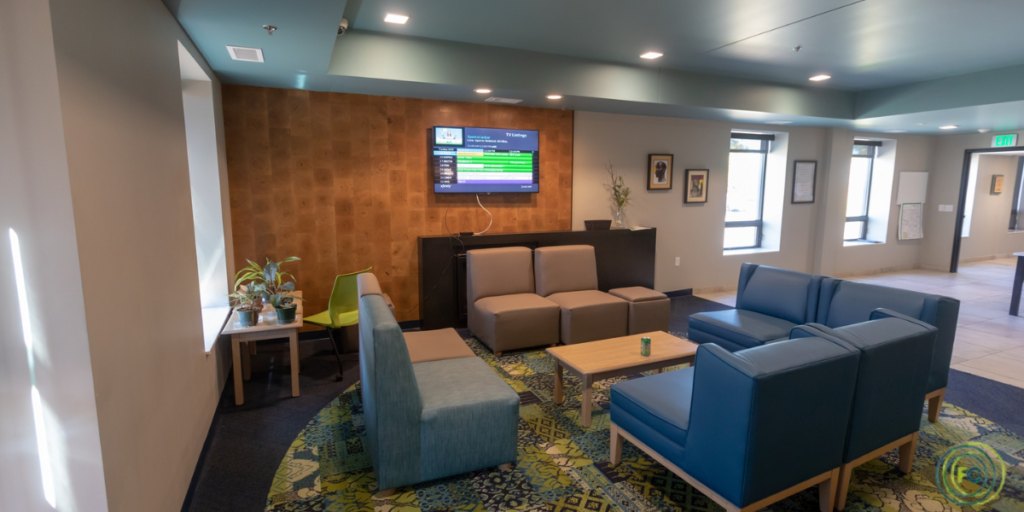
Visit the majority of behavioral health units constructed by the year 2010, and you can experience it firsthand: the cold and institutional ambiance. Hard surfaces. Bare walls. Furniture that appears better suited to a detention center rather than a healing center. This was the inevitable situation of a med psych unit design over decades, a practice that the design of healthcare institutions inevitably observed at the intersection of acute medical requirements with behavioral health requirements.
The dilemma has always been evident: how to ensure that vulnerable patients are safe and, at the same time, assist them in their psychological healing. Conventional methods had put safety as the first consideration, which created sterile areas that might further deteriorate patient outcomes. Employees understood this was not the best, but the other option of warm, home-like style setups did not appear to fit the stringent safety measures that were mandated in such dangerous premises.
This is the good news: Innovations in modern med psych unit furniture are finally closing this gap. The solutions today demonstrate that you do not need to make a decision on whether to be clinical or humanized. With the use of intelligent designs, superior materials, and a more profound knowledge of trauma-informed care, it is now possible to offer spaces that safeguard patients as well as enhance dignity and recovery.
Why Humanizing Environments Matters in Risk Planning
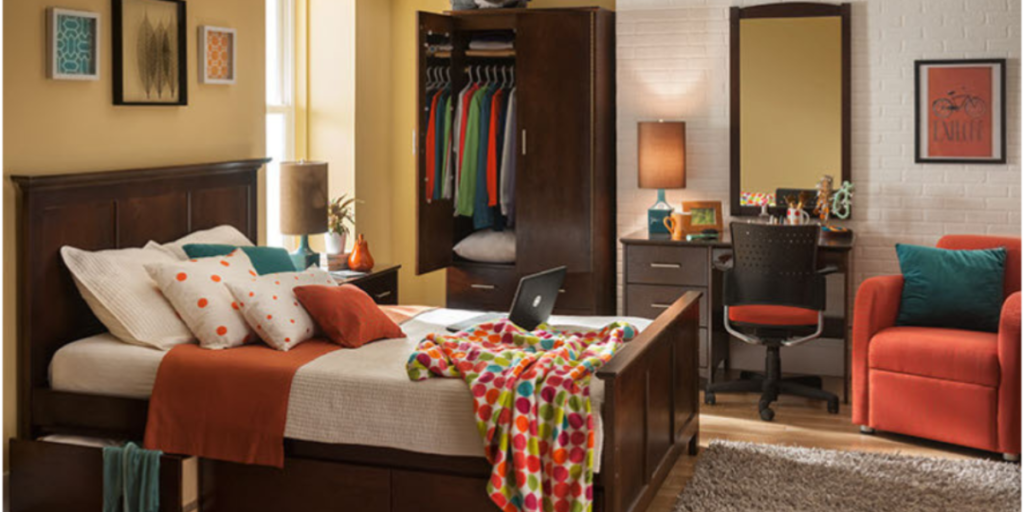
To be direct, the humanization of healthcare settings is not merely a matter of the physical attractiveness and ratings of patient satisfaction. It is a very important part of successful risk planning, which influences the results, the safety of the staff, and the regulations compliance.
- In the Manufacturing Process: Physical Safety and Health, Psychological Well-Being, and Regulatory Compliance
When manufacturers like Furniture Concepts approach med psych unit furniture design, they’re balancing multiple imperatives from the ground up. The physical safety requirements imply avoiding a source of ignition, avoiding hiding contrabands, and making sure that the products are not subject to excessive use and turned into instruments or a danger. However, psychological well-being is also being put into consideration in modern manufacturing, because institutional-looking furniture has been noted to provoke trauma reactions, agitation, and sabotage therapeutic relationships.
There is another layer of regulatory compliance. Behavioral health environments have their requirements that are provided by the Joint Commission, CMS, and even the state health departments. These standards are integrated into the design process by the smartest manufacturers rather than being an afterthought.
- In Product Design and Use: Physical Functionality and Comfort, Emotional and Psychological Connection, Accessibility and Inclusivity, and Environmental Responsibility
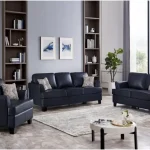
Consider what will occur when a patient comes into a safe patient room furniture that resembles and can be touched just like home. The studies consistently demonstrate that residential-style environments decrease agitation, augment medication adherence, and decrease the length of stay. Respected and comfortable patients have a higher chance of being engaged in the treatment.
Physical functionality is also important. Ligature-resistant furniture must be comfortable to utilize. A bed that theoretically is safe and that no person can sleep in can do no good. In the same way, furniture should be able to suit all patients regardless of their physical activities, mobility, and size without compromising safety features.
The picture is complete with environmental responsibility. Long-life furniture has a lower waste and overall ownership life-cycle cost, an important factor when facilities are making huge capital investments.
Key Furniture Innovations for Med-Psych Units

So what does next-generation med psych unit furniture actually look like? Let’s break down the innovations that are changing the game.
- Innovation 1: Ligature-Resistant Design
Ligature-resistant furniture is no longer a bolted-down metal piece as it used to be. The contemporary form is designed to remove the points of ligature, and the continual curves are made by the use of hidden hardware and encased bases as opposed to the conspicuous institutionalism. Molded plastic construction, such as produces smooth sides and no joints, edges, or bulges which may be used.
The idea is furniture that meets the highest standards of safety testing and appears to have no resemblance to the cold institutional furniture patients think of when they lose autonomy. When properly done, patients should not form their first impression of the safety features; they need to have furniture that looks and feels natural and comfortable.
- Innovation 2: Anti-Contraband Engineering
The use of anti-contraband furniture is a very important, though largely ignored, safety issue. Hollow-legged traditional furniture, removable paneling, or available voids provide hiding places for weapons, drugs, or any other illegal objects. This exposes patients and staff to danger.
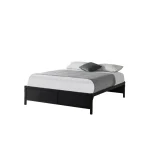
The modern solutions are based on tamper-resistant fasteners, construction with no visible ones, and box-like bed frames, which leave no opportunity for hiding. The building is tight to the extent that nothing can be hidden anywhere. Once again, this is achieved without making the furniture appear punitive; the anti-contraband features are embedded within the design DNA and not nailed on as part of the security features.
- Innovation 3: Extreme Durability and Temper-Resistance
This is one of the realities that facilities are always aware of; furniture in high-acuity behavioral health units is abused unbelievably. Crisis patients can kick, break, or throw furniture. Commercial furniture is not very durable under these circumstances, posing a safety risk and a cost of replacement.
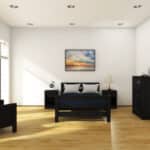
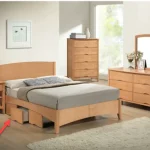
Med psych unit furniture is made using materials such as wood-grain metal and rotomolded plastics, which withstand extreme force and the appearance of a residential unit. These products replicate the feeling of wood bedroom sets but with the strength to withstand blows that will break down traditional furniture. What has been created is furniture that appears friendly but works like armor.
- Innovation 4: Infection Control
The COVID-19 pandemic has driven up what was already known by healthcare facilities: infection control is non-negotiable. The safe patient room furnishings should have non-porous surfaces that can be cleaned with hospital-grade disinfectants on a daily basis without degrading, cracking, or sustaining pathogens.
This need does away with most of the traditional materials, such as fabric upholstery or porous woods. The contemporary solutions involve solid plastics, coated metals, and others that are designed with healthcare settings in mind. The surfaces are easy to clean, they dry fast, and are also able to sustain their integrity by undergoing several thousand cleaning cycles.
Spotlight on Solutions: The Furniture Concepts Approach

The philosophy of Furniture Concepts is simple: the behavioral health patients should have furniture that helps them recover and also not without sacrificing their safety or dignity. An example of such a method is two product lines.
- Molded Plastic (Sequoia Series): Durability for High-Acuity Areas Without the “Institutional Look”
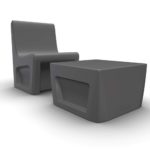
The Sequoia Series shows what can be done with a high level of molded plastic construction. They are meant to be used in the most acute settings where the risk of safety is the greatest. The one-piece design creates furniture that does not appear as normal ones because the seamless design has removed any ligature points or contraband hiding holes, and the molded design has actually made it look contemporary and homey.
Patients observe the furniture found in a modern house. Furniture that satisfies all the requirements of risk management is witnessed by safety directors. The two points of view are right, and the two demands are satisfied.
- Metal Solutions (Morris Series): Heavy-Duty Steel That Mimics Wood Bedroom Sets
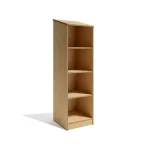
The Morris Series is another approach that is used by facilities that desire the particular look of traditional bedroom furniture. Made of heavy-duty steel that is wood-grained, these works are models of the appearance and feel of residential furniture, yet offer the durability and safety characteristics that are needed in the behavioral health environment.
The weight has a dual role; the furniture is so heavy that it cannot be easily thrown or turned into a weapon, but it is also so mobile that move around to allow reconfiguring of the room whenever necessary. The wood-grain finish is obtained by the application of state-of-the-art coating technologies that are both appealing and entirely biological in compliance with infection control approaches.
Strategic Implementation: A Checklist for Facilities

When purchasing the med psych unit furniture, it is not enough to make an order out of a catalog. These are facilities that should be considered:
- Assess patient acuity levels. The high-acuity units should have the highest safety features, whereas the step-down units may focus on comfort and normalization. Align furniture requirements with the real risk profiles and not over-engineer all spaces.
- Balance weight versus mobility. Furniture must be heavy enough to ensure that it is not projectile, yet must not be so heavy that it cannot be moved by the staff to clean or rearrange the rooms. Discuss with manufacturers to achieve the correct balance for your specific needs.
- Consider Quick Ship options for urgent needs. In the case of opening a new unit or replacing damaged furniture, it is not always possible to wait 12-16 weeks until receiving a custom order. Such manufacturers as Furniture Concepts have Quick Ship, which delivers stock in days instead of months, which is of paramount importance when you are in a hurry to open the beds.
- Plan for total cost of ownership. The cost of initial purchasing is important, but the same thing applies to the durability and the necessary maintenance, and replacement. High-end furniture that can have a longer life span (3 times) is the most appropriate investment.
- Involve clinical staff in selection. The people who work with the furniture, daily nurses, mental health technicians, and environmental services staff, have insights that administrators might miss. Their input improves both functionality and buy-in.
Conclusion
Changes in the development of the med psych unit furniture are indicative of the larger paradigm shift in the way we conceptualize behavioral health care. We are no longer in the misleading dilemma between the safety and the dignity, the institutional effectiveness and the treatment settings. Ligature-resistant furniture, anti-contraband furniture, and infection-resistant materials, as modern innovations demonstrate that it is not only possible to have both.
To the facilities to plan new units or refurbish existing facilities, the message came across with clarity that you do not have to compromise. The furniture will be there to provide a humanizing healthcare environments to facilitate recovery, and all the safety and legal standards. The issue is not whether it can be done, but whether you are prepared to invest in furniture that really works to both provide patient care and risk management.
The patients in your care deserve spaces that support their healing journey. Your staff deserves environments that enhance rather than complicate their work. And your organization deserves furniture that performs reliably for years to come. Contact us to book furniture that lasts longer and has a patient-friendly material.