








5 Common Furniture Safety Oversights in Behavioral Health Units And How To Avoid Them
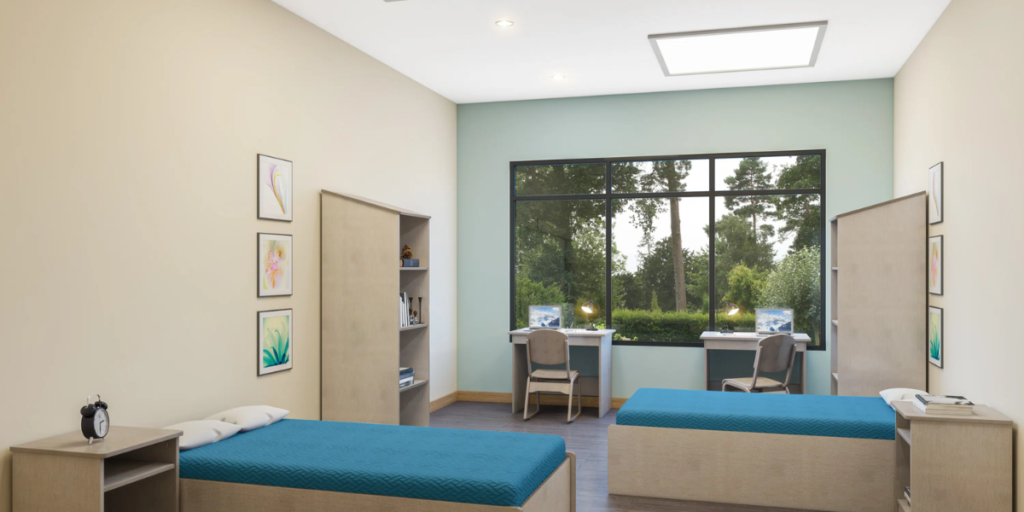
Furniture selection is far more complex than simply choosing durable pieces when it comes to creating safe, therapeutic environments in behavioral health facilities. The stakes are also distinctively high in these environments-furniture should actively avoid self-harm, avoid any chance of weaponization, and minimize the possibility of contraband concealment, but at the same time must contribute to patient recovery and dignity. However, even the most obedient behavioral health unit usually possesses the so-called “invisible” safety threats in its furnishing options that may undermine patient and staff safety.
At Furniture Concepts, we understand that the behavioral health unit needs a special approach to furniture safety that is both protective and therapeutic in design. Our mission is to assist behavioral health providers in providing the critical environments that restore through carefully designed, ligature-resistant behavioral health furniture that protects without being institutional in the least. This blog will outline the five most common furniture safety oversights in behavioral health settings and offer practical solutions.
Oversight 1: Underestimating Ligature and Self-Harm Risks
The Oversight
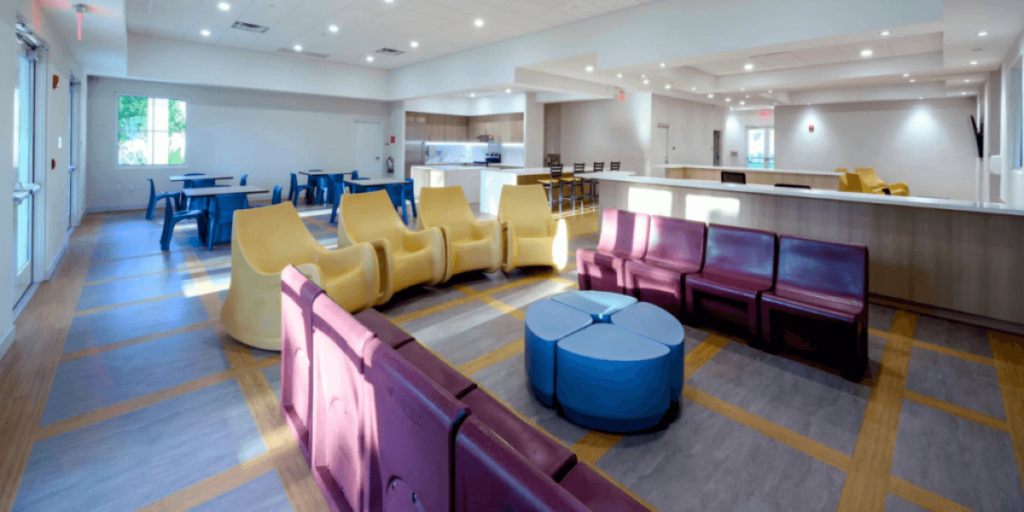
A behavioral health furniture safety problem that is often underestimated, but is among the most critical, is the issue of ligature points – any outcropping, crevice, or connection that may be utilized as a self-harming tie-off point. The unfortunate assumption most facilities make about furniture is that residential-style furniture is safe by default, simply because it appears comfortable and homely. Nonetheless, the tiniest examples of furniture may contain multiple ligature hazards: sticky handles of dressers and nightstands, open hinges on the doors of the cabinets, and spacing of the furniture parts, as well as ornaments, which serve as anchor points.
The Solution
The design of the anti-ligatures needs careful consideration for every furniture. Some design features, such as the elimination of any possible tie-off points, should be included in behavioral safety furniture:
- Sloped tops do not allow any item to be attached to the top of the furniture. Instead of flat tops on which things may be anchored, sloped surfaces prevent sliding; hence, this risk is eliminated.
- Recessed or integrated pulls replace protruding hardware. Anti-ligature furniture has recessed finger pulls into the front of drawers or touch-latch designs that need no additional hardware of any kind.
- Continuous hinges are used instead of the exposed pin hinges with gaps that can be found on the entire length of doors. This eliminates the gaps between hinge parts that can be used.
- Open storage options, doors, and drawers are eliminated where they are not needed, and hardware, as well as spaces between these elements, are done away with.
- Sealed construction closes off any gaps between furniture components, between furniture and walls, and beneath furniture pieces.
At Furniture Concepts, our anti-contraband bedroom furniture and safe casegoods exemplify these principles. In our collections, safety features are integrated to address the risk of ligatures without compromising the residential atmosphere, which supports therapeutic settings. All the pieces are subjected to strict testing so as to determine and remove possible points of attachment.
Oversight 2: Overlooking Weaponization and Stability
The Oversight
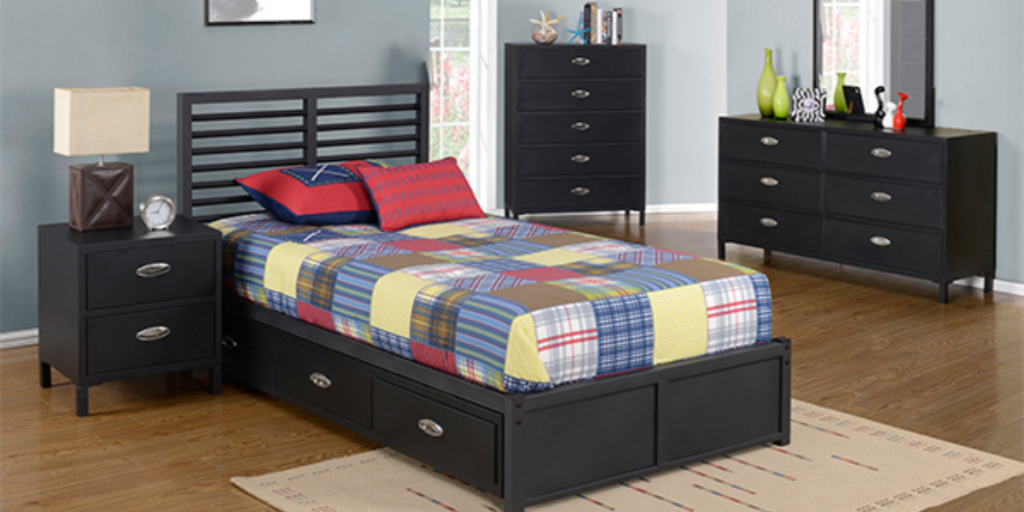
The other key safety gap is the choice of lightweight furniture that is easy to carry, dump, or dismantle into sharp, dangerous debris. Furniture stability is of importance in behavioral health environments, especially when dealing with a crisis scenario. Standard residential furniture – which is aimed at regular domestic use – is frequently lightweight, easy to move and rearrange, but poses a significant risk of being turned into a weapon of mass destruction.
Furniture that tips easily poses injury risks even without intentional misuse. Pieces constructed with materials that splinter or shatter when broken create sharp edges and projectiles. Removable components like legs, knobs, or decorative elements can be detached and used as weapons or tools for property damage.
The Solution
Ligature-resistant behavioral health furniture should be designed to provide outstanding stability and resist tampering:
- Heavily weighted construction makes furniture difficult or impossible to lift and throw. Wood framing and concrete strengthening create weight, which fixes elements in position.
- Bolt-down options allow the furniture to be fixed to the floors and walls in case maximum security is needed. This is of utmost significance to beds, desks, and seating in high-acuity units.
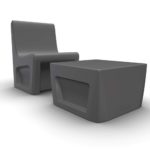
- One-piece molded construction does away with joints, seams, and independent parts that may be torn down. Furniture made of molded plastic, such as that, does not have distinct pieces that can be removed and broken into sharp objects.
- Impact-resistant materials can be hit hard without being splintered, broken, or forming sharp edges. The choice of materials is determined by impact absorption and structural integrity.
Furniture Concepts provides strong solutions, such as its molded plastic line and its Tough Stuff line of solid wood, which is in a crate-like design. We use identical, one-piece construction for our manufactured plastic items, making them free of weak areas and potential weapons. We use solid wood collections with extremely heavy construction and reinforced joints that withstand the harshest conditions. Such works represent the philosophy of residential style, contract performance, looking as though they were furnishings of the home, but acting like institutional-grade machinery that is designed to endure institutional service.
Oversight 3: Ignoring Contraband and Concealment Opportunities
The Oversight
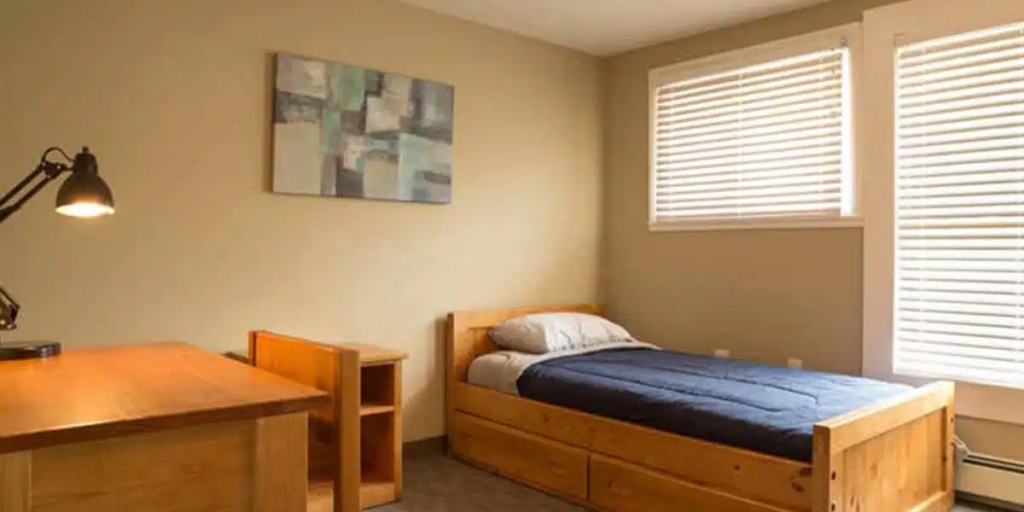
Furniture that provides hiding places for contraband, medications, weapons, drugs, or other prohibited items, creates serious security and safety challenges. Traditional furniture design may have many opportunities for concealment: deep drawers with an empty space behind and beneath them, unfinished bases leaving gaps between the bottom of the furniture and the floor, removable panels or backs, complicated construction with spaces between parts.
The Solution
Anti-contraband behavioral health furniture has been designed to have no hiding places:
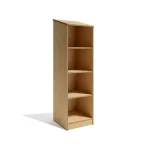
- Open shelving provides complete visibility with no enclosed spaces. All goods in open shelves are always visible, and it is practically impossible to hide contraband.
- Fully enclosed bases that are sealed to the floor eliminate the cavity beneath furniture where items could be hidden. Rather than furniture that sits on legs with open space underneath, anti-contraband pieces feature bases that extend fully to the floor with no gaps.
- Zero-depth seams ensure that furniture construction includes no gaps between components where items could be wedged or hidden. Drawers fit precisely with no wasted space behind or beneath them.
- Welded or permanently sealed construction prevents furniture from being disassembled to access internal cavities. All components are permanently joined, eliminating any removable panels or backs.
- Transparent or semi-transparent materials that enable one to see the inside without having to pull out or shift furniture.
Furniture Concepts is the manufacturer of anti-contraband open shelving furniture and bedroom furniture that is specifically designed to provide no possibilities of concealment. To prevent the deployment of contraband, our anti-contraband collections feature closed construction, small areas of enclosure, and designs that can be easily checked in a short period of time.
Oversight 4: Choosing Materials That Undermine Infection Control

The Oversight
Behavioral health facilities are highly exposed to infection control, although the furniture materials may not have the proper attention to fluid resistance and cleanability. Porous fabrics trap body fluids, spills, and contaminants, which form reservoirs of bacteria and pathogens. Complex seams and tufting form crevices in which fluids might accumulate and can never be cleaned by detergents. Cushion cores provide access points through which fluids may enter Cushion Pads with zippered fabric covers. Bacteria can be found in wood and other porous surfaces when they are not sealed properly.
The Solution
Infection control needs furniture fabrics and constructions, which are specially designed to serve in the healthcare setting:
- Fluid-resistant performance vinyls offer non-porous barriers that do not allow infiltration of fluids in upholstery. Vinyls that are used in a medical setting can be washed and disinfected using hospital-grade cleaners without degradation.
- Seamless or waterfall cushion construction eliminates seams and crevices where fluids may accumulate. The cushions are made in one piece with sparse stitching and edges run flowing without interruption or junction.
- Zipperless designs prevent fluid from penetrating cushion cores. Instead of using removable and zipper-pulled covers, anti-contraband behavioral health furniture is made with permanently sealed upholstery.
- Non-porous surfaces on all furniture components prevent contaminants from being absorbed. Wood surfaces receive sealed finishes, and metal components feature powder-coated or other impermeable finishes.
- Cleanable construction with smooth surfaces, rounded edges, and accessible areas ensures that all furniture surfaces can be thoroughly wiped down and disinfected.
At Furniture Concepts, our fluid-resistant performance fabrics and easy-clean designs address infection control without sacrificing comfort or aesthetics. Our furniture collections include medical-grade vinyls available in various colors and textures to give the appearance and feel of standard upholstery and to be much more resistant to fluids. The cushion cores will not be penetrated through the fluid, and our zipperless designs allow all the surfaces to be easily and efficiently cleaned between patients.
Oversight 5: Prioritizing Aesthetics or Cost Over Trauma-Informed Design
The Oversight
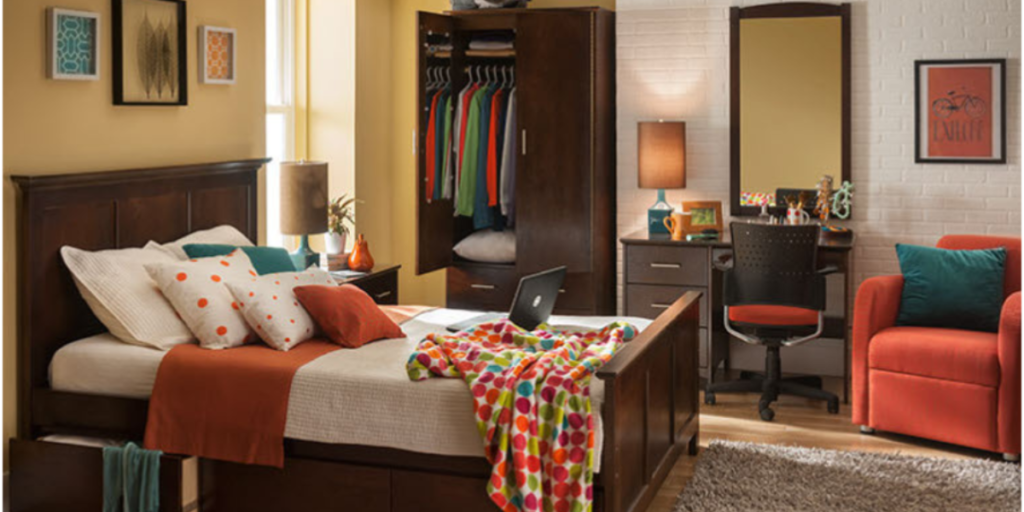
The worst furniture safety oversight, perhaps, is falling into the so-called “institutional trap” in which furniture is selected based on safety, comfort, or both; however, it does not combine safety and comfort effectively. There are two types of this oversight:
- The cold institutional approach: Choosing unquestionably safe furniture: heavy metal construction, plain designs, prison-like looks, but which produces an atmosphere of punitive instead of therapeutic. Such an institutional environment may be a barrier to recovery by strengthening the sense of punishment, shame, or dehumanization.
- The unsafe “homey” approach: The selection of safe, comfortable residential furniture that makes the house look warm and inviting; however, it has various safety hazards. This design does not include the specialized safety needs of a behavioral health setting.
Neither of the two strategies works with patients. The institutional approach is likely to hold the patients physically secure but compromises their psychological healing. The home-like medicine means that patients and staff are subjected to avoidable injuries and safety hazards.
The Solution
The answer is the so-called “residential style, contract performance,” i.e., furniture that appears and feels like any home furnishings. Still, it includes all the safety measures needed in behavioral health environments. This is based on the understanding that the behavioral health, furniture safety, and therapeutic design are not rival objectives but complementary ones.
Trauma-informed design principles guide furniture selection:
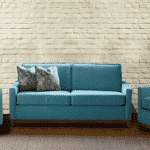
- Dignity-centered aesthetics ensure that safety features are integrated invisibly. Furniture looks residential and welcoming, not institutional or punitive.
- Homelike comfort gives the psychological advantages of familiar, comfortable furnishings with concealed safety aspects.
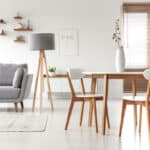
- Normalized environments promote recovery by creating an environment that resembles home more as opposed to institutions to enable patients to visualize successful reintegration in communities.
- Quality construction will ensure that furniture will not lose all its look and use even after years of intense use because of good construction, and this ensures safety and value in the long run.
At Furniture Concepts, our “Mindful Design Solutions” philosophy embodies this balance of dignity and durability. Every piece in our collections is engineered to meet rigorous safety standards while maintaining the warm, residential aesthetic that supports healing. The designers at our company strive to ensure that functionality features, such as ligature resistance, anti-contraband design, resistance to liquids, and tamper-proof hardware, are incorporated into furniture that is both comfortable and homely.
Why Choose Furniture Concepts for Behavioral Health Units
At Furniture Concepts, we have invested time in finding solutions to the multidimensional issues of furniture safety in behavioral health units. We are offering a generic solution to all five typical oversights by:
- Specialized expertise: We understand the unique needs of behavioral health settings and design furniture that meets those demands.
- Comprehensive solutions: Ligature-resistant bed furnishings to anti-contraband storage, fluid-resistant seats to tamper-proof constructions, we offer solutions in all areas in your facility.
- American craftsmanship: Our furniture is carefully designed in the USA and carefully made with respect to quality and detail.
- Trauma-informed design: We strike a balance between safety and therapeutic design, providing furniture that is protective and not institutional.
- Proven durability: Our heavy-duty construction means that furniture does not lose its safety features and appearance during years of intense use.
- Responsive support: Our team works closely with behavioral health providers to understand specific needs and recommend optimal solutions.
Conclusion: Balancing Safety and Therapy
Creating safe, therapeutic environments in behavioral health facilities requires furniture that addresses multiple, sometimes competing priorities. The five common oversights that we have discussed, including not recognizing the dangers of ligature, not paying attention to the issue of weaponization, not paying attention to the issue of contraband concealment, using materials that compromise infection control, and focusing on the matters of safety or aesthetics at the expense of the other, can jeopardize patient safety along with the outcome of the therapy.The solution lies in partnering with specialists who understand that furniture safety in behavioral health units extends beyond durability. It requires skills in anti-ligature design, anti-contraband building, infection control, tamper-resistance, and trauma-informed aesthetics. Most importantly, it must be dedicated to designing furniture to safeguard patients and staff and enhance the healing process with comfort and dignity. Contact us today to discover how our Mindful Design Solutions can transform your behavioral health environment.