










What Furniture Is Required for a Behavioral Health Unit?
A chair, bed, or nightstand that works in an ordinary facility can create avoidable risks inside a behavioral health unit. Selection has to account for patient safety, mobility, supervision, cleaning, and room use.
A behavioral health unit commonly needs a patient bed & mattress, secure storage, patient chairs, lounge seating, dining and activity tables, and accessible or bariatric furniture. A high-acuity bedroom has different needs than a supervised dining area, so the environmental risk assessment should guide each choice.
Furniture Concepts supplies behavioral health unit furniture for patient rooms, common areas, dining rooms, activity spaces, and treatment settings.
What furniture does a behavioral health unit need?
Most behavioral health units need specialized furniture for patient bedrooms, common areas, dining rooms, activity spaces, visitation rooms, and accessible areas. Common items include patient beds and mattresses, secure storage units, patient chairs, lounge seating, dining tables, activity furniture, recliners, sleeper chairs, and bariatric furniture.
However, there is no single furniture list that works for every behavioral health setting. Product selection should reflect the room’s purpose, patient population, supervision level, mobility requirements, & environmental risk assessment.
This list is a starting point, not a universal specification. Consider patient acuity, observation level, mobility, staff workflow, room layout, and foreseeable misuse before choosing individual products.
Start with risk, not a standard shopping list.
Patient bedrooms, seclusion rooms, & spaces with limited observation generally need stricter controls. Supervised therapy or waiting areas may allow different furniture.
Define each room before selecting products. Who will use it, what will happen there, and how closely will staff observe it? Consider whether a piece could be lifted, thrown, dismantled, climbed on, or placed against a door. Patient age, acuity, mobility, fall risk, medical equipment & staff-assistance needs may also change the right choice.
Fixed, weighted, or movable?
Floor-mounted furniture suits rooms where lifting, throwing, barricading, or movement is a serious concern. Ballasted furniture adds weight with some placement flexibility. Freestanding pieces may suit closely supervised settings.
Essential patient room furniture
Patient beds and mattresses
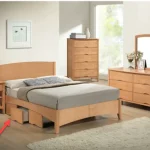
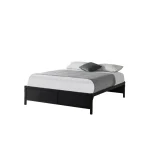
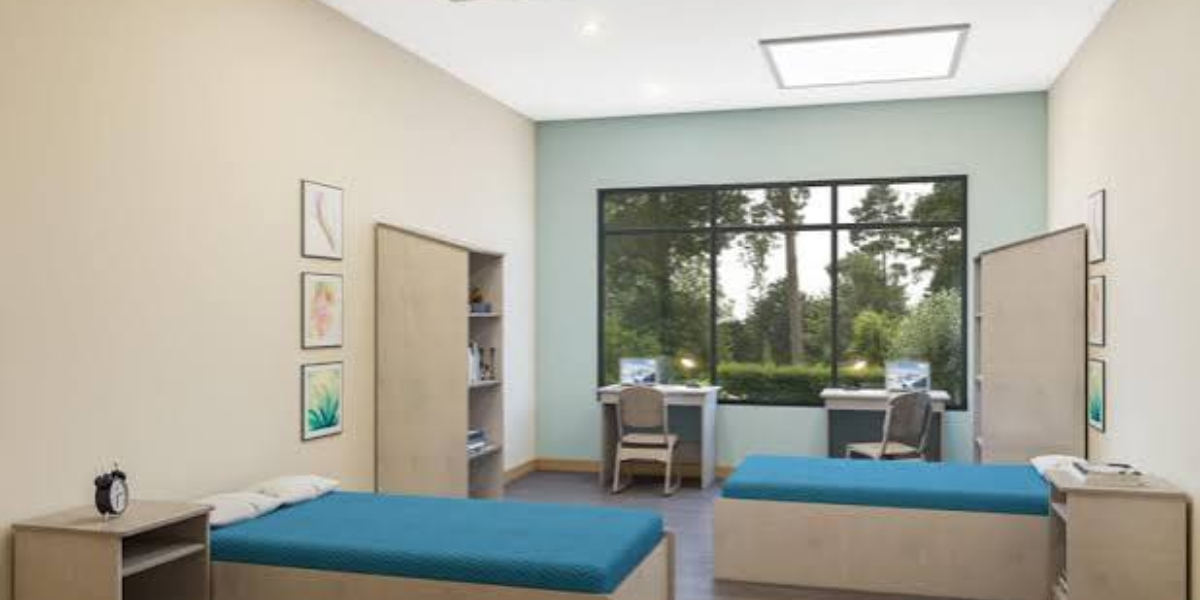
A patient bed should fit the person’s medical needs and the room’s risk profile. Solid decks, enclosed sides, & concealed mounting points can reduce access to removable parts.
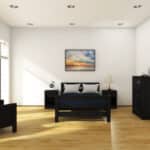
Furniture Concepts offers the Safe Harbor Wood Platform Bed and a Molded Plastic Bed with Solid Sides and a Floor-Mount Option. A medical bed may still be necessary, but known ligature points require documented precautions.
The mattress must fit the frame. Furniture Concepts offers foam-core, fiber-core, and bariatric mattresses with fluid- and bed-bug-resistant covers. Check seams, closures, cleaning instructions, & replacement-cover availability.
Options from Furniture Concepts include a foam-core mattress with a fluid- and bed-bug-resistant cover, a fiber-core mattress with a fluid- and bed-bug-resistant cover, and a bariatric behavioral health mattress. The right core and cover depend on comfort, support, infection-control routines, and the needs of the patient population.
Nightstands, wardrobes, and storage
Deep voids, removable drawers, standard handles, & space beneath a cabinet can complicate inspection or conceal prohibited objects.
Options include the Safe Harbor Nightstand, Safe Harbor Single Wardrobe, Safe Harbor Three-Shelf Chest & Endurance 4-Shelf. Open compartments simplify visual checks, while sloped tops can reduce climbing opportunities.
Patient chairs and desks
Patient chairs need stable bases, smooth edges, limited accessible hardware, suitable seat height, arm support, & cleanable surfaces. Good support can help patients sit and stand safely.
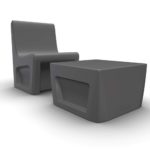
The molded plastic floor-mount armchair restricts movement & offers arm support. The Molded Plastic Armless Chair may suit supervised settings where flexible placement is acceptable. The better option depends on patient needs and the expected behavior within that room.
Molded Plastic Wall-Mount Desks and Molded Plastic Floor-Mount Desks provide space for reading, writing, or therapeutic work. Position them away from observation lines, doors, wheelchair turning areas, & emergency routes.
Common-area, milieu, and group-room furniture
Common spaces need furniture that supports conversation without adding unnecessary risk. Rotationally molded seating has one-piece construction, few accessible parts, & easy-clean surfaces.
Options include the Summit Lounge Chair, Custom Molded Plastic Seating Group, Molded Plastic Bench & Group Room Chair. Consider weighted or floor-mounted versions where lifting is a concern.
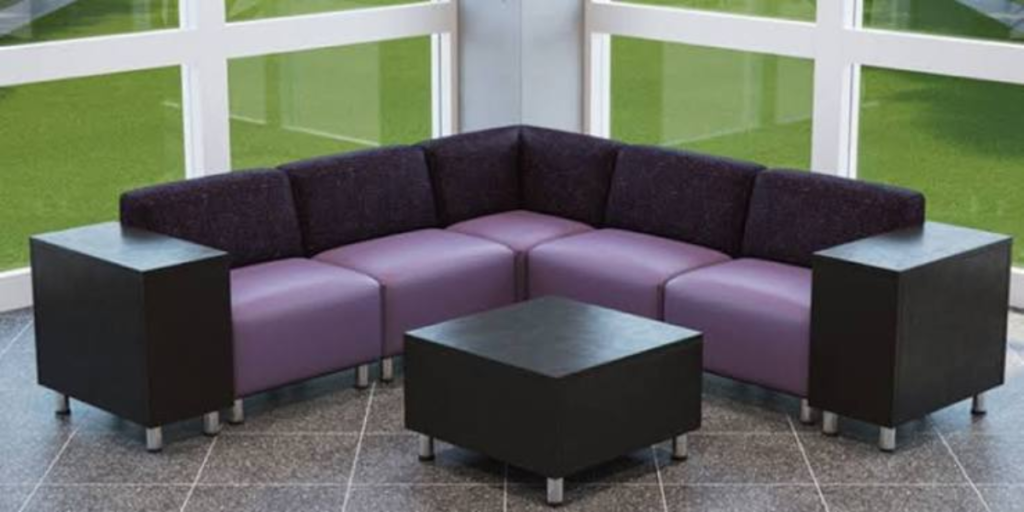
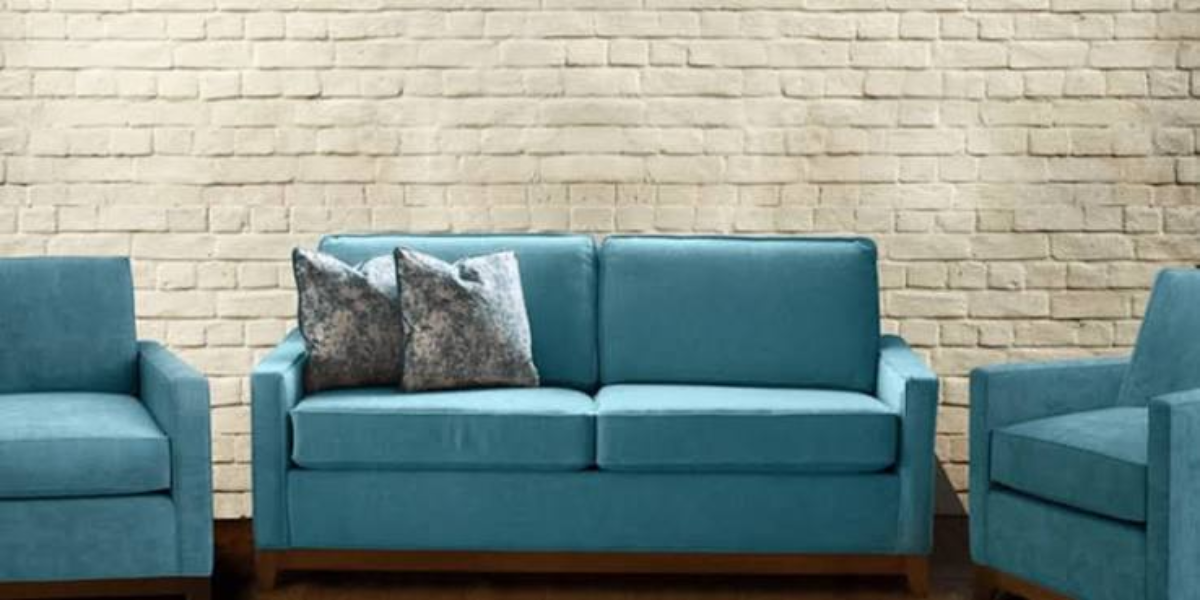
Custom upholstered sectional groups can provide a softer look in supervised spaces. Check seams, cushion attachment, internal components, moisture resistance, and approved cleaning agents.
Moving mechanisms in recliners and sleepers require review. The Foster Patient Recliner, Foster Sleeper Chair, Foster Patient Rocker, & Ruhe Rocker may suit observation or visitation areas when approved.
Recliners, rockers, and sleeper chairs
Recliners, rockers, and sleeper chairs support observation, visitation, & comfort, but moving mechanisms need close review. The Foster Patient Recliner, Foster Sleeper Chair, Foster Patient Rocker & Ruhe Rocker may suit approved, supervised spaces. Review levers, gaps, hardware, internal components, user operation, & required clearance.
Dining, activity, and multipurpose furniture
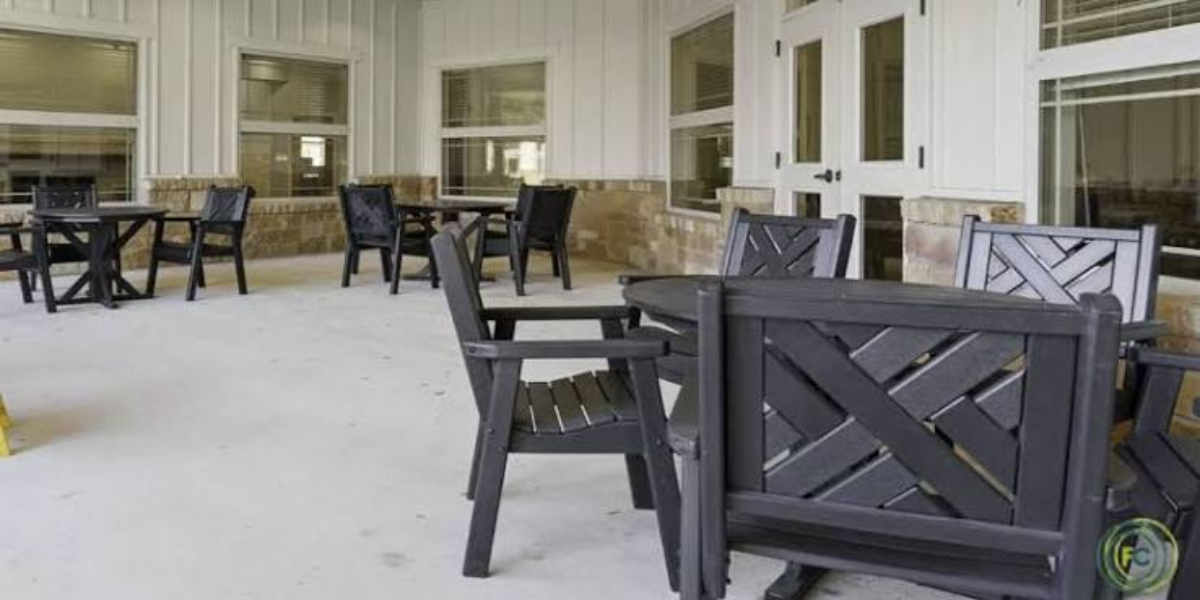
Dining and activity tables should be stable and leave room for wheelchairs, staff, & safe circulation. Higher-risk spaces may need solid bases, rounded edges, & bolt-down or ballasted options.
Options include a molded plastic dining table with bolt-down and ballasted options, a molded plastic game table, institutional dining tables, training tables, molded chairs, and floor-mounted stools.
A stackable chair may be convenient, but check how easily it can be lifted, broken down, or placed against a door.
What makes furniture suitable for a behavioral health unit?
Suitable furniture manages several risks at once:
- Ligature-resistant construction reduces accessible tie-off points.
- Concealed or secure fasteners limit tampering.
- Weight, anchoring, & one-piece construction reduce weaponization risk.
- Closed gaps and controlled seams make contraband harder to conceal.
- Rounded edges reduce sharp-corner and impact hazards.
- Nonporous or fluid-resistant surfaces support routine cleaning.
Ligature-resistant does not mean risk-free. A suitable chair can become unsafe if anchored incorrectly, placed where it blocks observation, or cleaned with damaging chemicals.
Bariatric and accessible furniture
Integrate bariatric furniture into the room plan. Check published weight capacity, seat width, arm support, seat height, & turning clearance.
Furniture Concepts carries the Fremont Bariatric Chair, bariatric guest seating, and bariatric mattresses. Pair suitable seating with an accessible dining table, adequate knee clearance, and clear travel paths for wheelchairs and other mobility devices.
Place standard and bariatric seating in the same area when possible. This supports dignity & gives staff practical choices as patient needs change.
Choose furniture room by room.
Create a room schedule listing users, supervision, activities, & main risks. Compare construction, anchoring, cleanability, dimensions, accessibility, warranty, & maintenance. Confirm that anchors match the substrate & staff can inspect around each piece.
Standardization simplifies cleaning, training, replacement parts, & future purchasing. Still, one chair or bed may not suit an entire unit. Standardize where patient needs & risk profiles align, then document exceptions.
Conclusion
Furnishing a behavioral health unit requires careful consideration of patient safety, comfort, durability, and cleanability. From patient beds and secure storage to patient chairs, dining tables, and bariatric furniture, every product should be selected according to the room’s purpose, supervision level, and documented risk assessment.
Furniture Concepts offers durable behavioral health unit furniture for patient rooms, common areas, dining spaces, and treatment facilities. If you are planning a new unit or upgrading an existing facility, contact Furniture Concepts to discuss suitable products, request pricing, and create a safer, more supportive environment for patients and staff.
Frequently asked questions
What furniture is required in a behavioral health unit?
Patient beds, mattresses, secure storage, patient chairs, lounge seating, dining tables, activity equipment, & accessible choices are required by most units. The final list is based on patient needs, use of the room, supervision, and assessment of environmental danger.
Does all behavioral health unit furniture need to be ligature-resistant?
There’s not a single spec that fits every room. Higher-risk patient areas generally require more robust ligature-risk precautions than monitored waiting, dining, treatment, or staff areas.
What is the difference between heavy-duty and ligature-resistant furniture?
“Heavy-duty” describes strength & expected wear. Ligature-resistant furniture is designed to reduce accessible attachment points. A durable commercial chair may still be unsuitable for a high-risk patient room.
Should patient chairs be weighted or bolted to the floor?
That depends on the risk of lifting, throwing, barricading, or unwanted movement. Floor mounting offers the greatest movement restriction. Ballasting provides weight with some flexibility.
What type of patient bed is appropriate?
Choose between a platform-style behavioral health bed & a medical bed based on clinical needs & the environmental risk assessment. Document precautions when a necessary medical bed has accessible ligature points.
Can upholstered furniture be used?
Yes, in areas where risk assessment authorizes it. Examine the seams, cushion attachment, internal mechanisms, fluid resistance, & cleaning instructions.
What should facilities check when buying bariatric furniture?
Verify published weight capacity, seat dimensions, frame construction, stability, arm support, & accessibility. The furniture should also meet the behavioral safety needs of its intended room.