








Choosing Safer Seating for Behavioral Health Environments
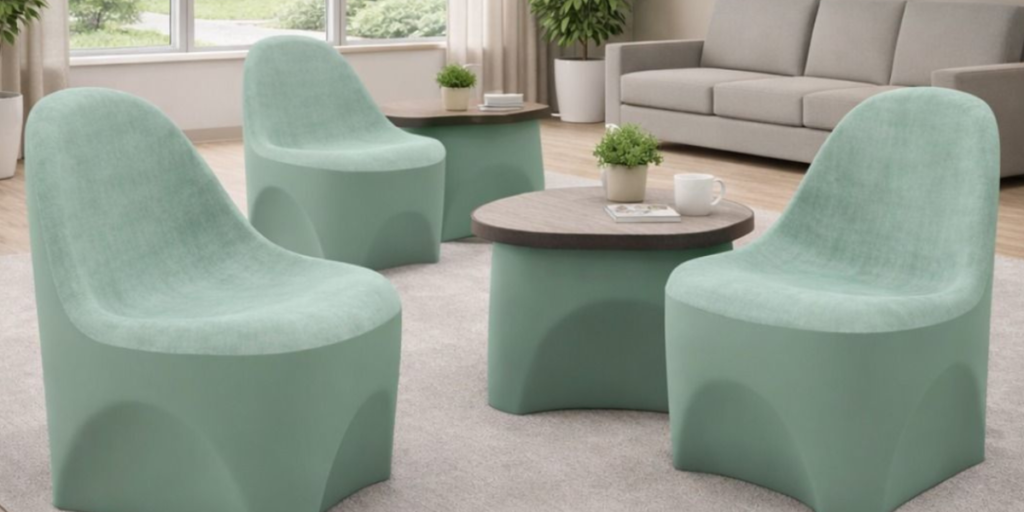
Choosing Safer Seating for Behavioral Health Environments
Furniture selection in behavioral health environments involves more than choosing the right size, style or finish. The people using the space, level of supervision, intended use of the room and potential safety concerns can all influence which furniture is appropriate.
Seating is an especially important consideration. Chairs are used throughout patient rooms, intake areas, therapy spaces, dining rooms and common areas, often in environments where durability, stability, cleanability and risk reduction are priorities.
For facility planners, designers and care teams, the goal isn’t simply to find a “safe chair.” It’s to select seating that is appropriate for the specific environment and supports the facility’s broader approach to safety, care and patient dignity.
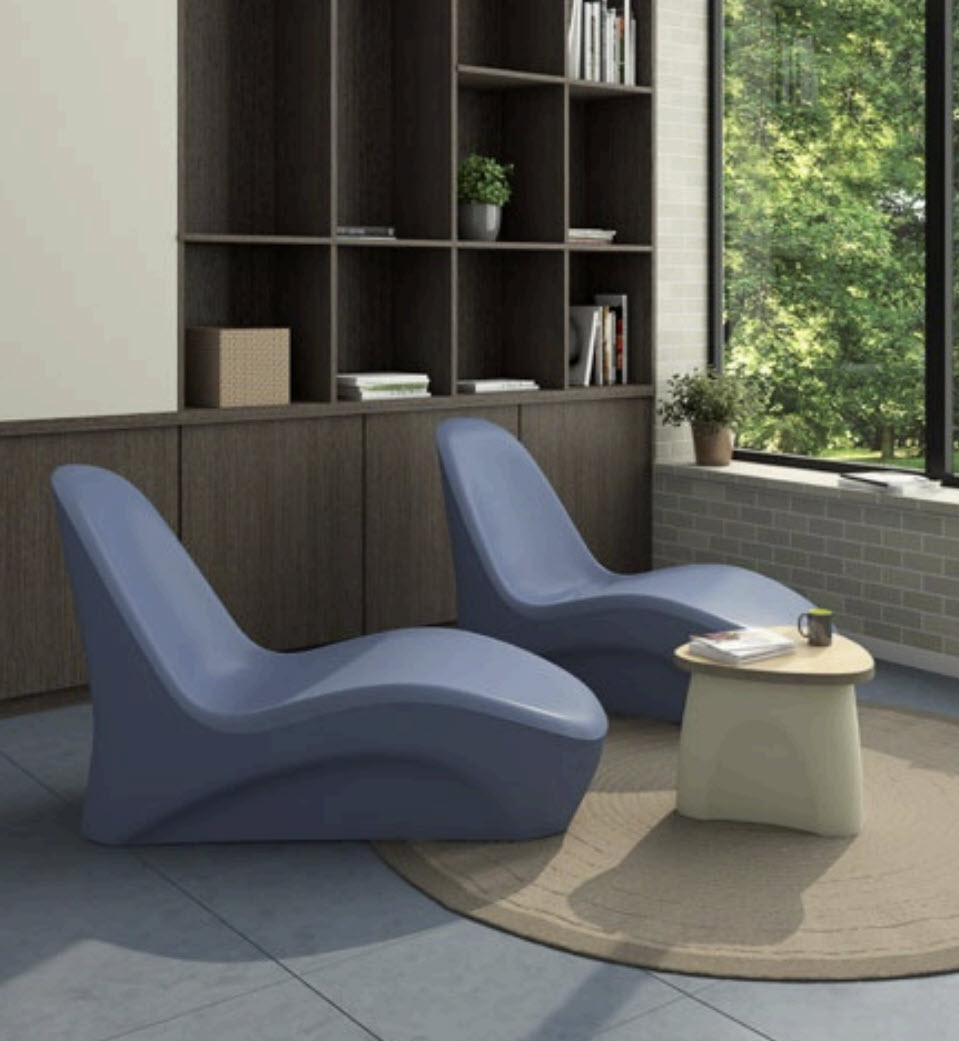
What Do People Mean by “Anti-Suicide Chairs”?
The term “anti-suicide chairs” is sometimes used when searching for seating intended for higher-risk behavioral health environments. However, no individual piece of furniture can eliminate risk or prevent self-harm on its own.
A more useful way to think about this category is safety-focused behavioral health seating—furniture designed with characteristics that may help reduce certain environmental risks when used as part of a facility’s overall safety strategy.
Depending on the environment and patient population, those considerations may include:
- Ligature-resistant design
- Tamper-resistant construction
- Limited removable components
- Weighted or difficult-to-move designs
- Secure or concealed fasteners
- Durable, cleanable materials
- Appropriate anchoring options
- Construction suited for demanding, high-use environments
The appropriate combination of features will vary by facility, room and population.
Why Standard Commercial Seating May Not Be Appropriate
A chair designed for a hotel lobby, office or other commercial setting can perform perfectly well in its intended environment. Behavioral healthcare settings, however, may introduce additional considerations.
Furniture can experience frequent movement, intensive cleaning and continuous daily use. In some settings, loose components, exposed hardware, lightweight construction or other design characteristics may also introduce concerns that would not normally be considered in a traditional commercial space.
That’s why furniture selection should begin with the environment and the people using it, rather than with appearance alone.
Start With the Level of Risk
Not every behavioral health space requires the same type of furniture.
A crisis stabilization environment may have very different requirements than a residential substance use disorder program, supportive housing community or outpatient treatment center. Even within one facility, furniture requirements may differ between patient rooms, intake spaces, dining areas and staff-supervised common rooms.
Before selecting seating, consider questions such as:
Who will use the space?
Consider the patient or resident population, length of stay and level of supervision.
How will the room be used?
A patient bedroom has different demands than a group therapy room, dining space or waiting area.
What potential risks have been identified?
Furniture should be evaluated as part of the facility’s overall environmental risk assessment.
Does the furniture need to be movable?
Some spaces benefit from flexibility, while others may require weighted or secured furniture.
How frequently will it be cleaned?
Materials and construction should support the facility’s cleaning and infection-control protocols.
Answering these questions early can help narrow furniture choices before decisions are based on aesthetics, dimensions or price.
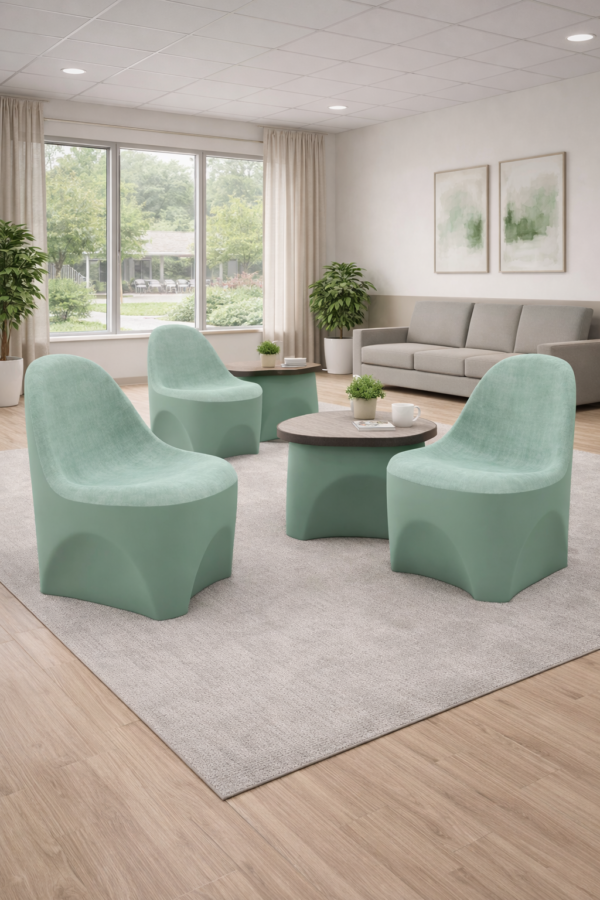
Key Features to Consider in Behavioral Health Seating
Stability and Durability
Behavioral health furniture often needs to withstand demanding daily use. Strong construction and appropriate materials can help furniture perform reliably while reducing maintenance and replacement needs.
Depending on the environment, facilities may also consider weighted designs or anchoring options to limit unintended movement.
Tamper-Resistant Construction
Loose parts and easily removable components can create unnecessary concerns in some behavioral health settings.
Purpose-built furniture may incorporate concealed or secure fasteners, simplified construction and other design features intended to reduce opportunities for tampering or misuse.
Ligature-Resistant Design Considerations
In environments where ligature risk is a concern, furniture design may need to minimize potential attachment points.
Ligature resistance should be considered within the context of the entire room and the facility’s established environmental safety protocols rather than as a stand-alone furniture feature.
Cleanability
Behavioral health seating may be cleaned frequently and by multiple staff members. Materials should be appropriate for the facility’s cleaning protocols and able to withstand repeated cleaning without unnecessary deterioration.
Nonporous surfaces, reduced seams and simplified forms can make routine maintenance easier in appropriate applications.
Comfort and Dignity
Safety-focused furniture does not have to make a room feel cold or institutional.
Thoughtful furniture selection can help create environments that feel comfortable, welcoming and respectful while still addressing the practical and safety requirements of the facility.
Color, finish, upholstery and overall room planning can all contribute to spaces that support dignity and a more residential atmosphere.
Ligature-Resistant Seating vs. “Anti-Suicide” Seating
The terms are sometimes used interchangeably online, but it is important to understand what the terminology actually communicates.
Ligature-resistant furniture is designed to reduce potential ligature attachment opportunities associated with the furniture’s form or construction.
“Anti-suicide chair” is a broader search term sometimes used to describe seating intended for higher-risk behavioral health environments. It should not be interpreted to mean that a chair can independently prevent suicide or self-harm.
Instead, facilities should evaluate specific furniture characteristics—including construction, stability, ligature considerations, tamper resistance, cleanability and durability—based on the needs and risk profile of the environment.
Furniture is one component of a much larger approach that can include facility design, policies, staffing, supervision and clinical practices.
Avoid a One-Size-Fits-All Approach
One of the biggest mistakes in behavioral health furniture selection is assuming that every behavioral health environment requires the same solution.
Over-specifying furniture can unnecessarily increase project costs or create spaces that feel more institutional than necessary. Under-specifying furniture can result in products that aren’t appropriate for the demands of the environment.
The better approach is to match the furniture to the population, room, level of supervision and identified risks.
For example, a highly supervised common area may allow different furniture options than an unsupervised patient bedroom. A long-term residential program may place greater emphasis on creating a familiar, home-like atmosphere while still requiring durability and cleanability.
Understanding those differences is an important part of effective space planning.
Furniture Is Only One Part of the Environment
No chair, bed, table or casegood should be viewed as a complete safety solution.
Furniture selection works alongside facility design, operational policies, staff supervision, clinical practices and environmental risk assessment.
That distinction is important when evaluating products marketed using terms such as “anti-suicide,” “behavioral health,” “tamper resistant” or “ligature resistant.”
Rather than relying on a label alone, facilities should evaluate the actual construction and characteristics of a product and determine whether they are appropriate for the intended application.
How Furniture Concepts Helps
At Furniture Concepts, we work with behavioral healthcare organizations to think beyond individual products.
We consider the population being served, how each room will function, the demands placed on the furniture and the overall goals of the environment.
From patient rooms and intake spaces to dining, therapy and common areas, our team can help identify furniture options based on factors such as:
- Safety considerations
- Durability and stability
- Cleanability
- Available floor space
- Storage needs
- Resident and patient comfort
- Desired level of mobility or anchoring
- Overall look and feel of the environment
Because the right solution isn’t simply about choosing furniture designed for behavioral health.
It’s about choosing furniture that is appropriate for this population, in this room, for this purpose.
Creating Safer, More Supportive Spaces
Thoughtful behavioral health environments balance many priorities at once: safety, durability, comfort, dignity, maintenance and efficient use of space.
Furniture plays an important role in that equation, but the best results come from looking at the entire environment rather than relying on any single product or safety feature.
By identifying requirements early and selecting furniture based on the people and spaces it will serve, facilities can create environments that are safer, more functional and more supportive of care.
Planning a behavioral health space? Furniture Concepts can help you evaluate furniture options for patient rooms, intake areas, common spaces, dining environments and other group living applications.
Frequently Asked Questions
What is an “anti-suicide chair”?
“Anti-suicide chair” is a term sometimes used when searching for seating designed for higher-risk behavioral health environments. Rather than implying that a chair can prevent suicide, Furniture Concepts recommends evaluating specific safety-related characteristics such as ligature-resistant design considerations, tamper-resistant construction, stability, durability and anchoring options when appropriate.
What type of seating is used in behavioral health facilities?
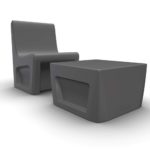
The appropriate seating depends on the patient population, room type, supervision level and facility requirements. Options may include rotationally molded seating, weighted seating, securely constructed upholstered seating and other furniture designed for demanding behavioral health environments.
Is all behavioral health furniture ligature resistant?
No. Behavioral health environments vary significantly, and furniture should be evaluated according to the intended application and identified risks. Facilities should review specific product characteristics rather than assuming that a behavioral health designation means a product meets every safety requirement.
Does behavioral health furniture have to look institutional?
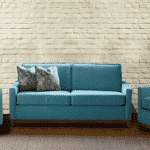
No. Safety, durability and dignity can coexist. Today’s behavioral health environments can incorporate residential-inspired colors, finishes, forms and layouts while selecting furniture appropriate for the needs of the population.
What should facilities consider when choosing behavioral health seating?
Consider the population, level of supervision, room function, identified risks, durability requirements, cleaning protocols, mobility or anchoring requirements, available space and the overall goals of the care environment.