








Durable Outdoor Furniture for Healthcare Facilities: A Buyer’s Guide
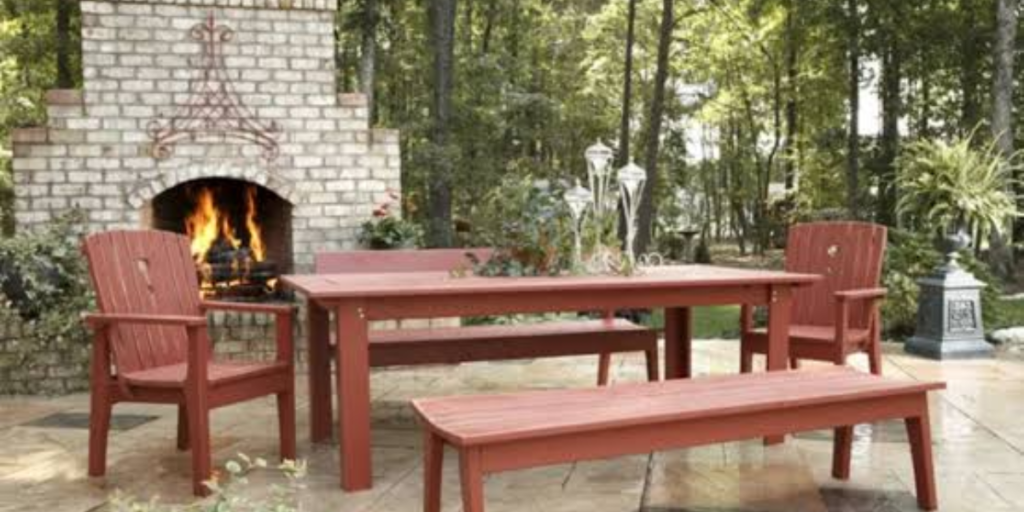
A courtyard can look inviting on opening day and become difficult to maintain within a season. Wobbly chairs, damaged finishes, uncomfortable seats, and tables that wheelchair users cannot approach can leave an expensive space underused.
Choosing outdoor furniture for healthcare facilities starts with understanding who will use it, how staff will maintain it, and what conditions it must withstand. A hospital visitor garden, senior living patio, and supervised behavioral health courtyard need different specifications.
This guide explains how to compare materials, evaluate comfort and accessibility, check cleaning requirements, and assess long-term costs before placing an order.
What Makes Outdoor Furniture Suitable for Healthcare Facilities?
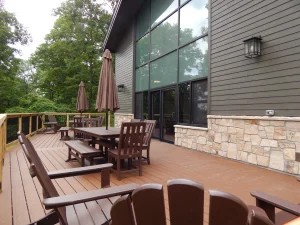
Suitable outdoor furniture combines documented outdoor suitability, stable construction, appropriate user support, cleanable surfaces, and a layout that accommodates mobility needs. Buyers should verify the exact model’s load rating, maintenance instructions, cleaning compatibility, warranty, and installation requirements against the facility’s intended use.
A “commercial” label alone does not answer those questions. Ask what the manufacturer has tested, which conditions the warranty covers, and whether the product is approved for your specific setting.
For example, lightweight chairs may suit a staff terrace where employees rearrange seating. A courtyard exposed to strong winds may require a different product and an approved installation method.
Start by recording four project requirements:
- Users: Patients, residents, visitors, staff, and people using mobility devices.
- Activities: Dining, quiet breaks, family visits, or supervised group sessions.
- Exposure: Direct sunlight, rain, humidity, freezing weather, salt air, or irrigation.
- Operations: Cleaning products, inspection routines, storage, and staff handling.
These details give suppliers a useful purchasing brief and help you compare equivalent options.
Compare Materials Against Your Actual Maintenance Conditions
The best material for durable outdoor furniture depends on its construction, finish, location, and care requirements. Material names help narrow the shortlist, but they do not establish a finished product’s performance.
Use this comparison to identify the questions each option needs to answer.
| Material | Why buyers consider it | What to verify before ordering |
|---|---|---|
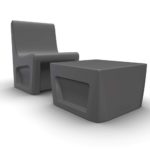
| HDPE or other outdoor-rated polymers | Options with molded or slatted construction and no exposed metal seating surface | Outdoor approval, UV stabilization, structural reinforcement, cleaning instructions, and heat exposure |
| Coated steel | Substantial frames and options suited to communal settings | Coating system, protection at welds and fasteners, repair procedures, and corrosion exclusions |
| Aluminum | Options that staff may find easier to reposition | Frame strength, joint construction, finish durability, stability, and wind exposure |
| Teak or other outdoor-rated wood | A familiar appearance for gardens and visitor spaces | Surface care, refinishing expectations, splinter inspections, and cleaning compatibility |
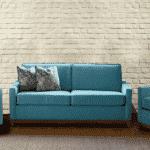
| Outdoor upholstered seating | Cushioned comfort for selected patios and terraces | Fabric and foam specifications, drying requirements, seam access, storage, and replacement covers |
Outdoor upholstered seating Cushioned comfort for selected patios and terraces Fabric and foam specifications, drying requirements, seam access, storage, and replacement covers
Check UV Resistance and Corrosion Resistance Separately
Weather-resistant furniture must match the conditions at your property. A covered patio and an uncovered courtyard can expose the same chair to very different levels of moisture and sunlight.
Ask what evidence supports the product’s UV resistance, including any limits concerning fading, cracking, or loss of strength. For metal products, request details about corrosion resistance at joints, welds, underside surfaces, and fasteners.
With powder-coated steel, inspect how the manufacturer protects the whole assembly. A damaged finish can expose the underlying metal, so the availability of an approved touch-up procedure matters.
When comparing HDPE outdoor furniture, confirm the complete construction rather than assuming the polymer name guarantees performance. Supports, fasteners, connections, and the finished design also affect durability.
Evaluate the Surface Patients Will Actually Touch
Request a sample or trial chair whenever possible. Check armrests, seat edges, exposed hardware, and the underside of tables for rough or difficult-to-clean areas.
Assess seating in its intended location during sunny conditions. Consider shade, surface temperature, drainage, and how quickly the seating becomes usable after rain. A strong frame offers limited value if residents regularly avoid sitting on it.
Confirm Cleaning Compatibility Before Approving a Finish
Healthcare outdoor seating needs a maintenance plan that staff can carry out consistently. Dirt, pollen, food spills, and bird droppings create practical cleaning demands even when furniture is outside a clinical treatment area.
The CDC’s guidance on selecting healthcare finishes and furnishings emphasizes effective cleanability and compatibility with facility disinfectants. Its procurement guidance supports involving cleaning and infection prevention personnel in material selection.
Before approving a product, give the supplier the names of the cleaners and disinfectants your team expects to use. Request written disinfectant compatibility information for the exact finish, including dilution, application method, contact time, and rinsing instructions.
A broad statement such as “easy to sanitize” does not establish compatibility with every chemical.
Where disinfection is indicated, the EPA’s instructions for using registered disinfectants explain that the surface must remain visibly wet for the full labeled contact time. Your cleaning process must also respect the furniture manufacturer’s surface-care instructions.
Consider cushions carefully. They introduce additional questions about moisture, removable covers, drying, and storage. Approve them only when your team can maintain them under the expected conditions.
Test Comfort and Accessibility as One Decision
Good hospital courtyard furniture should support people who use the space differently. Some visitors need firm seating with armrests. Others need room for a wheelchair, walker, caregiver, or service animal.
A consistent visual style does not require every seat to have identical dimensions. A considered mix can accommodate a wider range of users.
Choose Seats That Support Sitting and Standing
Evaluate seat height, depth, firmness, back support, and armrest position with the people responsible for resident or patient mobility.
Very low seating or deep lounge chairs may be difficult for some users to enter and leave. Where appropriate, ask rehabilitation or occupational therapy staff to assess sample furniture before approving a large order.
Confirm the seat weight capacity for each model and configuration. Ask whether the rating applies to an individual seat or the entire bench, and request supporting documentation rather than relying on appearance.
Verify the Complete Accessible Layout
Accessible outdoor furniture depends on the surrounding space as well as the product. A table cannot serve its intended users if planters, chair legs, or neighboring seats obstruct the approach.
The U.S. Access Board’s ADA requirements for dining and work surfaces specify a surface height of 28 to 34 inches where those provisions apply, along with forward approach and knee and toe clearance. Its clear floor space guidance explains the basic 30-by-48-inch minimum, with additional space needed in certain configurations.
Have the project’s design professional verify applicable requirements for the complete installation. Check routes, turning areas, table supports, and surface conditions together.
For additional planning considerations, review Furniture Concepts’ guide to furniture accessibility.
Match Stability and Security to the Care Setting
The right commercial outdoor furniture balances stability with operational needs. Staff may need to rearrange a terrace for activities, while another area may require fixed seating.
Heavier furniture is not automatically the best choice. It can create handling difficulties, and weight alone does not establish wind performance or eliminate tipping concerns.
Queensland Health’s health facility design specifications identify durable materials and appropriate fixings as outdoor furniture considerations, including reducing danger during extreme winds. Treat this as a useful planning reference while following the requirements applicable to your own project.
Ask the manufacturer whether anchoring is permitted and obtain instructions for the intended substrate. Installation should preserve drainage, accessible circulation, and routine maintenance access.
Review Behavioral Health Outdoor Furniture Separately
Behavioral health outdoor furniture requires review against the program’s patient population, supervision model, and environmental risk assessment.
Have the clinical and facilities teams evaluate construction, movable components, mounting details, placement, and sightlines. An outdoor designation or heavy frame does not establish suitability for a behavioral health setting.
Furniture Concepts’ ligature-resistant furniture guide provides related background for purchasing teams. Final approval should address the exact product in its planned environment.
Compare Total Cost of Ownership Using the Same Assumptions
A lower purchase price can become expensive when a product requires frequent repairs, replacement cushions, seasonal handling, or early replacement.
Compare the total cost of ownership over a common planning period:
Purchase and delivery + installation + cleaning labor + maintenance + storage + replacements + disposal
The following example is hypothetical. It illustrates the calculation rather than predicting product performance.
| Five-year cost item | Option A | Option B |
|---|---|---|
| Purchase, delivery, and installation | $8,000 | $10,000 |
| Cleaning labor over five years | $3,000 | $2,500 |
| Repairs and replacement components | $2,000 | $750 |
| Seasonal handling and storage | $1,000 | $500 |
| Disposal within the comparison period | $0 | $0 |
| Illustrative five-year total | $14,000 | $13,750 |
In this example, the higher-priced option has a slightly lower five-year total. Different maintenance demands or replacement schedules could reverse that result.
Use your own labor rates, expected cleaning frequency, storage arrangements, and supplier quotations. Keep assumptions visible so the purchasing team can challenge them.
Read Warranty Exclusions Before Comparing Coverage
Ask whether coverage applies to commercial use, continuous outdoor exposure, finishes, corrosion, and the cleaning products you intend to use.
Also establish who pays for freight, labor, and site visits when a claim is approved. A replacement component may have limited practical value if the facility faces substantial shipping or installation costs.
Confirm the availability of replacement parts, including glides, slats, fasteners, cushions, and covers where applicable. Record model numbers and finish codes in the maintenance file.
Use a Sample Review Before Placing the Full Order
A sample review brings purchasing, facilities, cleaning, and care staff into the same decision. It can reveal problems that photographs and specification sheets leave unanswered.
Place the sample in the intended area and review:
- User fit: Sitting, standing, arm support, and access beside the seat.
- Maintenance: Cleaning access, approved products, drainage, and drying.
- Installation: Stability, permitted anchoring, routes, and staff handling.
- Documentation: Outdoor approval, load information, warranty, parts, and delivery terms.
Record the findings before committing to the full quantity. For example, a chair that staff can move easily may still need a different placement or storage plan on an exposed terrace.
Once the product is approved, use Furniture Concepts’ bulk outdoor furniture purchasing guide to help organize quantities, delivery, and installation.
Choose Furniture Your Team Can Keep in Service
The strongest buying decision connects comfort, accessibility, cleaning, and maintenance with documented product performance. Start with the courtyard’s users and conditions, then compare exact models against the same requirements.
Before approving outdoor furniture, obtain the care instructions, confirm the installation plan, and resolve gaps in warranty or replacement support. That preparation helps your team select seating and tables it can maintain and use with confidence.
Choose Outdoor Furniture That Fits Your Facility’s Daily Needs
Choosing durable outdoor furniture for healthcare facilities starts with the people who will use it and the team responsible for its upkeep. Compare materials, comfort, accessibility, cleaning compatibility, and long-term costs together. Before ordering, confirm each model’s outdoor suitability, installation requirements, warranty coverage, and replacement support.
Furniture Concepts can help you explore options for your courtyard, patio, or shared outdoor space. Contact our team to discuss your facility’s users, maintenance needs, and project requirements.
Frequently Asked Questions
What is the best outdoor furniture material for healthcare facilities?
The best material depends on weather exposure, cleaning products, user needs, and maintenance capacity. Compare the exact product’s construction, outdoor approval, load rating, and warranty rather than choosing by material name alone.
Can outdoor furniture be cleaned with healthcare disinfectants?
Only use a disinfectant when its label permits the intended use and the furniture manufacturer confirms compatibility with the exact surface. Follow the required concentration, contact time, and any rinsing instructions.
What should buyers check for accessible outdoor seating areas?
Check accessible routes, clear floor space, turning areas, table height, knee and toe clearance, and seating arrangements. Have the design professional verify the complete layout against applicable accessibility requirements.
Should outdoor healthcare furniture be anchored?
Anchoring depends on wind exposure, product design, site conditions, and the care setting’s risk assessment. Follow manufacturer-approved installation instructions and confirm that fixings preserve access, drainage, and maintenance.
How can facilities compare long-term outdoor furniture costs?
Compare purchase, delivery, installation, cleaning labor, maintenance, storage, replacement components, and disposal over the same period. Use documented assumptions and supplier quotations to calculate each option’s total cost.