








How Ligature-Resistant Furniture Support Safer, Trauma-Informed Behavioral Health Spaces?
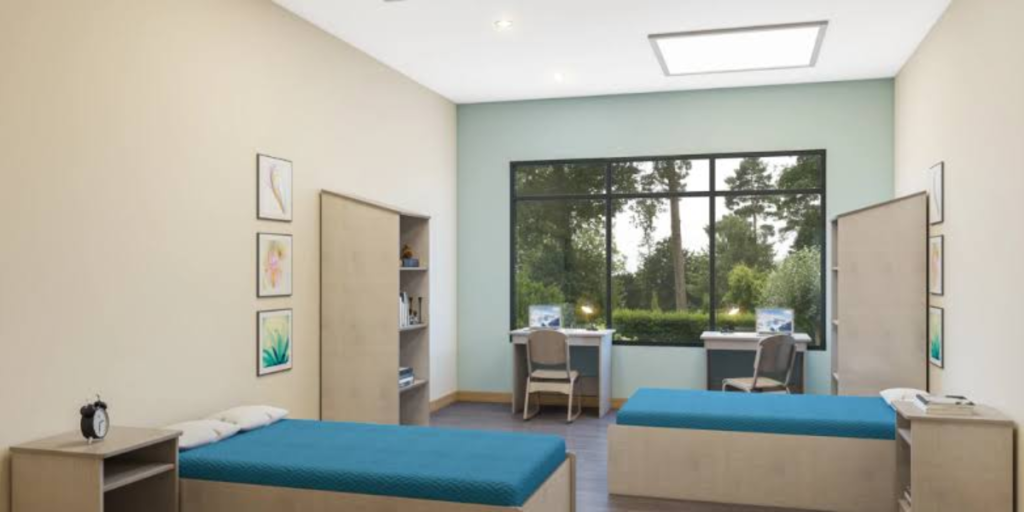
A chair, bed, or table does more than fill a behavioral health room. Its shape, weight, hardware, and finish can affect physical safety, emotional security, and how a patient perceives the care they’re receiving. That’s a lot of pressure to put on a nightstand, but it’s the reality facility leaders live with every day.
Reducing attachment points, tampering, barricading, throwing, and concealment risks is non-negotiable. At the same time, furniture that looks harsh or correctional can quietly undermine the dignity and calm that trauma-informed care is supposed to build.
This article breaks down what actually makes furniture ligature-resistant, how specific design features address different risks, how those features tie into trauma-informed design, and how facilities can choose the right products for different rooms and patient populations.
What is ligature-resistant furniture?
A ligature point is any feature, a handle, gap, rail, or hook, that could potentially allow a cord, fabric strip, or similar material to be attached & used for self-harm. Ligature-resistant furniture is engineered to reduce those accessible attachment opportunities through its shape, construction, joinery, and hardware choices.
It’s worth being precise here: ligature-resistant does not mean ligature-proof. No manufacturer can honestly claim zero risk, and any vendor who does should raise a red flag.
“Anti-ligature furniture” is a commonly searched term in this industry, and it’s often used interchangeably with ligature-resistant. But product suitability still comes down to the specific facility, room type, patient population, supervision level, and documented risk assessment. A product that works well in one unit isn’t automatically right for another.
It’s also worth separating furniture from ligature-resistant architectural fixtures, doors, plumbing fixtures, and hardware, which fall into a different category entirely. This article stays focused on furniture.
How does ligature-resistant furniture improve safety?
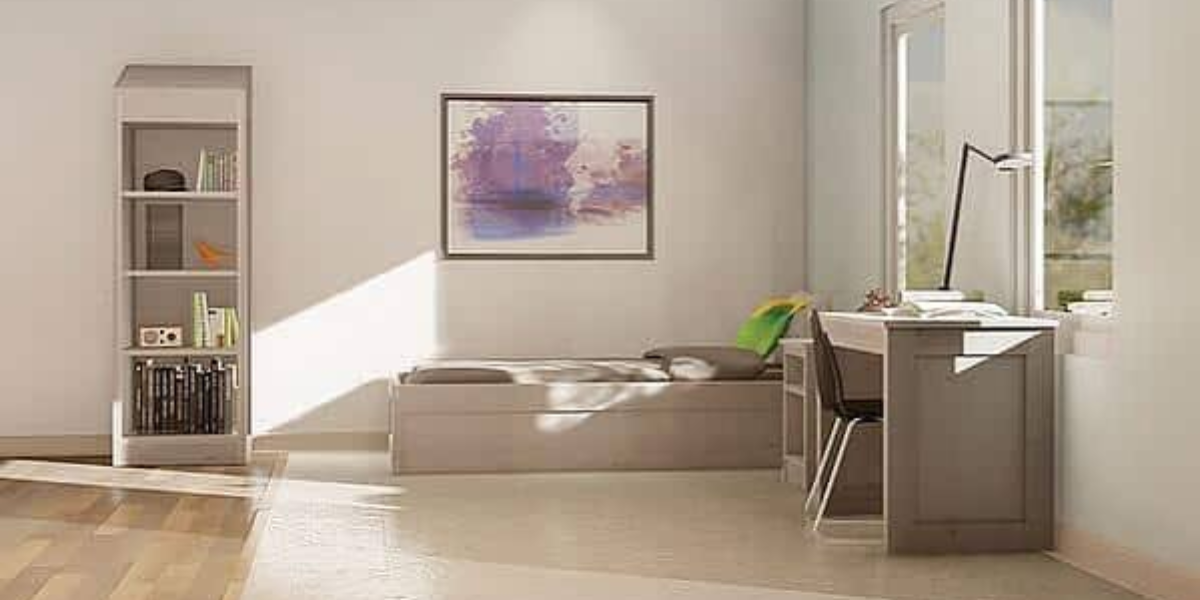
It reduces potential attachment points.
Sloped, rounded, or continuous surfaces make it physically harder to secure a cord or strip of fabric. Limited openings, handles, hooks, exposed rails, and accessible gaps all get engineered out wherever possible.
Good design doesn’t stop at the visible front of the piece. The underside, back, base, & wall interface matters just as much, sometimes more, because they’re less visible during routine checks. A gap that seems minor can become significant in an unsupervised or higher-risk area.
It restricts access to hardware and internal components.
Fully sealed joints and concealed or tamper-resistant hardware limit what a patient can access with ordinary objects. One-piece construction, where it makes sense for the product, reduces the number of removable parts that could be repurposed. Durable materials also matter here, since furniture that holds up under intensive daily use is less likely to develop the small failures that create new risks over time.
It addresses lifting, throwing, and barricading risks.
Weighted, ballasted, bolted, ganged, or floor-mounted furniture options exist for a reason. Ligature resistance and resistance to movement are actually separate considerations, and it’s a mistake to treat them as the same thing.
There is a clear trade-off between flexible room configurations and restricted movement. When necessary, facilities should consider furniture weight & location in relation to room utilization, patient acuity, and staff access.
Seamless surfaces can limit concealment and support cleaning.
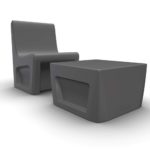
One-piece roto-molded furniture construction with limited seams means fewer crevices where contraband, debris, or fluids can collect. Nonporous, easy-to-clean surfaces compatible with facility-approved disinfectants also make everyday infection management easier.
That said, seamless doesn’t automatically equal ligature-resistant. Each product’s intended application should be verified rather than assumed.
| Design feature | Risk it may help address | Question for the facility |
|---|---|---|
| Limited gaps and attachment points | Ligature risk | Is it appropriate for this room’s assessed risk level? |
| Sealed or concealed hardware | Tampering and disassembly | Can parts be accessed with ordinary objects? |
| Weighted or anchored construction | Throwing and barricading | Is movement restriction required here? |
| Seamless, non-porous surface | Concealment and cleaning | Is it compatible with approved disinfectants? |
Safety is more than a product label.
Here’s something a lot of buying guides skip over: “ligature-resistant” isn’t a universal certification, and it isn’t a one-size-fits-all solution.
Furniture should be evaluated within the full environment of care. A product that’s appropriate for a supervised lounge may not belong in a patient bedroom or another less-observed space. Risk shifts with patient population, clinical use, observation level, room layout, & access to movable materials.
Specifications should be taken from real product literature, not marketing fluff. A full safety examination includes attachment points, tamper resistance, impact resistance, concealment, cleanability, fire performance, accessibility, and maintenance. And ideally, clinical, facilities, design, infection control & procurement departments all have a place at the table for selection.
How ligature-resistant furniture supports trauma-informed care
A residential appearance can reduce institutional stigma.
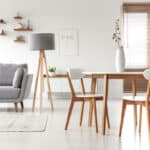
Wood-look finishes, warm colors, & recognizable furniture forms make a space feel less correctional and more like somewhere a person might actually live. That residential styling has to be integrated with appropriate safety construction, not used as a substitute for it. Furniture Concepts focuses on durable pieces designed to humanize group-living environments without cutting corners on safety.
Rounded forms and comfortable proportions can support calm.
Smooth edges, balanced proportions, & supportive seating reduce visual harshness and remove threatening design cues. It’s fair to say furniture can contribute to a calmer setting, but it would be an overstatement to claim furniture alone creates calm. Daylight, color, acoustics, and layout all play a role too.
Normal-feeling furnishings can preserve dignity and agency.
When patients interact with recognizable, familiar furniture rather than overtly institutional objects, it can support orientation & emotional grounding. Where the risk assessment allows it, giving patients access to different safe seating areas can support a sense of autonomy. Trauma-informed design doesn’t mean removing necessary safeguards; it means implementing them with dignity intact.
A more predictable environment can also support staff.
Durable, appropriately selected furniture reduces avoidable environmental hazards. Clear layouts improve visibility and circulation, & furniture that’s easier to clean means fewer maintenance headaches during a busy shift. This doesn’t mean furniture alone reduces crisis frequency; it’s one piece of a much broader therapeutic environment.
What types of furniture fit different behavioral health spaces?
Furniture selection should reflect each room’s purpose, level of supervision, patient population, & environmental risk assessment. The same product may not be appropriate throughout an entire facility.
Patient rooms
Patient room furniture often requires the closest review because patients may spend time there with limited observation. Depending on the assessed risk, suitable products may include ligature-resistant beds, bedside storage, desks, chairs, & mattresses. Solid or enclosed profiles, protected hardware, cleanable materials, & long-term durability are especially important.
Common, activity, and dining areas
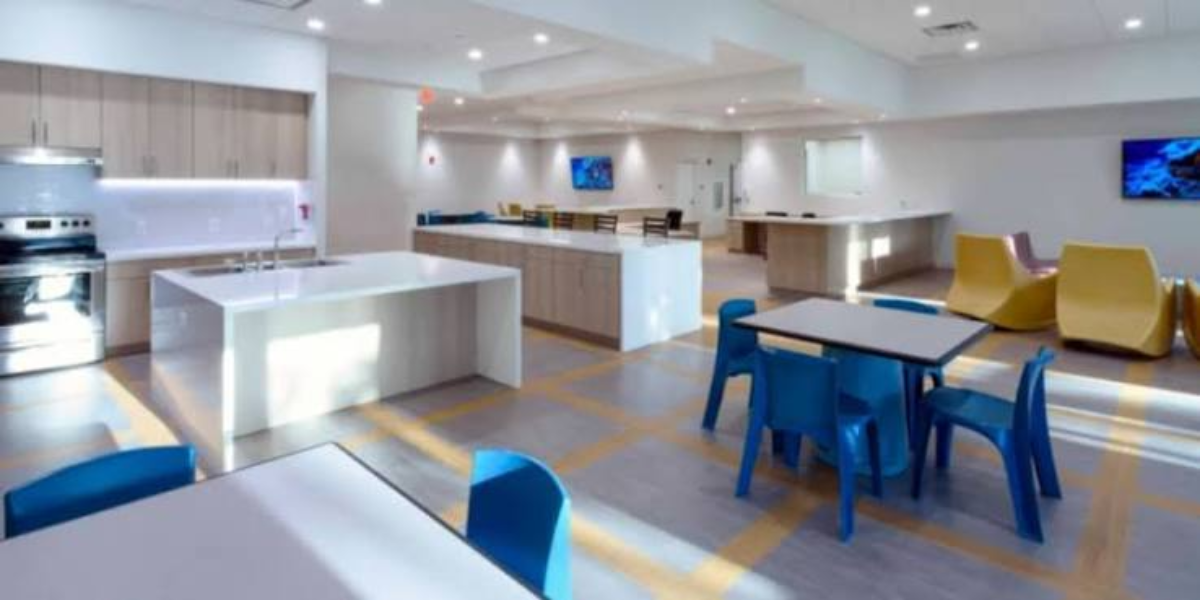
These shared spaces need durable chairs and tables that support social interaction without blocking staff sightlines or circulation. Furniture may be weighted, ganged, bolted, or floor-mounted when the room’s risk assessment calls for restricted movement.
Intake, waiting, and lower-risk transitional areas
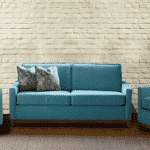
Where the risk assessment permits, these spaces may use residential-style upholstered seating, wood-frame chairs, bariatric furniture options, & furniture with accessible seat heights. The goal is to create a welcoming setting while meeting the facility’s safety, cleaning, & durability requirements.
For example, a higher-risk patient bedroom may require minimal gaps, protected hardware, and restricted furniture movement. A continuously supervised common room may allow durable residential-style seating that staff can rearrange. These examples illustrate room-specific planning and are not clinical or compliance recommendations.
How should facilities choose ligature-resistant furniture?
- Define the patient population, room use, and observation level.
- Complete a room-specific environmental risk assessment.
- Identify risks beyond ligature attachment, including tampering, throwing, barricading, concealment, sanitation, & fire safety.
- Decide whether furniture should be movable, weighted, ganged, bolted, or floor-mounted.
- Review construction details: hardware access, seams, bases, backs, & undersides.
- Confirm cleaning compatibility, durability, accessibility, & bariatric needs.
- Request manufacturer documentation for the exact model & configuration.
- Plan inspection, repair, replacement, and staff reporting procedures before installation.
Why choose Furniture Concepts for ligature-resistant furniture?
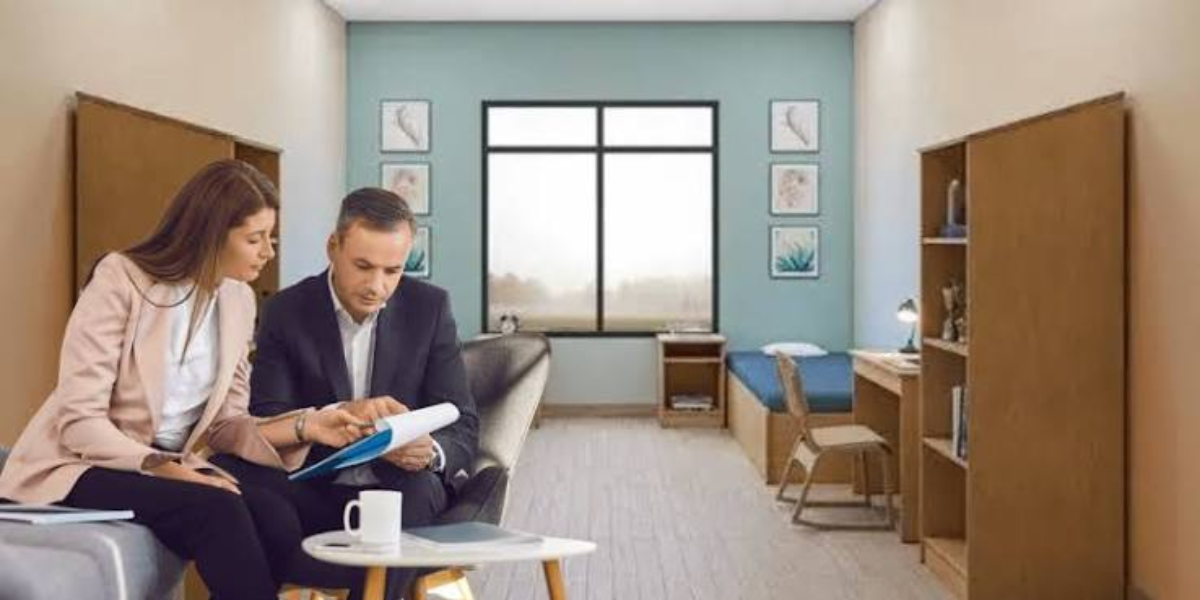
Selecting ligature-resistant furniture should be tailored to the specific needs of each room. Patient bedrooms, common areas, dining spaces, and intake areas have varying levels of observation and associated risks. We assist facilities in comparing options based on the purpose of the room, the patient population, movement restrictions, cleaning requirements, and environmental risk assessments.
Our solutions include ligature-resistant & roto-molded furniture with minimal gaps, secure hardware, robust construction, and easy-to-clean surfaces. We also offer residential style choices for reduced risk or supervised areas, providing facilities with the ability to encourage comfort & dignity without sacrificing safety needs.
Conclusion
Ligature-resistant furniture minimizes attachment points, restricts access to hardware, and addresses tampering and movement threats. Its value, however, relies on where it is utilized and the fit with the patient group, level of monitoring, & environmental risk assessment.
The best behavioral healthcare environments combine these safety features with familiar forms, pleasant proportions, and inviting finishes. That balance keeps patients and staff safe, preserves dignity, and supports a less institutional approach to treatment.
Furniture should always be selected with input from the clinical, facilities, infection-control, design, and procurement departments. Product documentation, proper installation, regular inspection & prompt repairs are equal in importance to initial specifications.
We help behavioral healthcare Facilities and group-living facilities compare durable furniture for patient rooms, common areas, dining spaces, and other intensive-use environments. Explore the available furniture options or contact us to discuss your facility’s room types, safety priorities, and project requirements.
Frequently asked questions
What is ligature-resistant furniture?
Ligature-resistant furniture uses carefully designed shapes, joints, and hardware to reduce accessible points where cords, fabric, or similar materials could be attached. It can lower environmental risk, but it cannot eliminate every possible hazard.
Is anti-ligature furniture the same as ligature-resistant furniture?
The terms are often used interchangeably. Both refer to furniture designed to limit potential attachment points. “Ligature-resistant” is the more precise term because no product is completely risk-free. Suitability still depends on the room, patient population, and risk assessment.
What features should behavioral health furniture have?
Behavioral health furniture may need limited gaps, concealed or tamper-resistant hardware, durable construction, rounded edges, and non-porous, easy-to-clean surfaces. Some rooms may also require weighted, anchored, or floor-mounted furniture.
Does ligature-resistant furniture need to be heavy or floor-mounted?
Not always. Ligature resistance addresses potential attachment points, while weighting & anchoring address movement, throwing, and barricading. Facilities should determine which features are necessary based on the room’s use, supervision level, & identified risks.
How does ligature-resistant furniture support trauma-informed care?
Ligature-resistant furniture can combine discreet safety features with comfortable shapes, familiar forms, & residential-style finishes. This balance supports physical safety while helping behavioral health spaces feel less institutional and more respectful of patient dignity.
Is roto-molded furniture suitable for healthcare facilities?
Roto-molded furniture may be suitable because its one-piece construction can reduce seams, accessible hardware, and concealment spaces. Its non-porous surface may also simplify cleaning. The exact product must still be evaluated for the intended room and risk level.
Where is ligature-resistant furniture commonly used?
Ligature-resistant furniture is commonly used in patient bedrooms, common rooms, activity areas, dining spaces, psychiatric units, residential treatment centers, addiction recovery facilities, and other higher-risk behavioral healthcare settings.
How should facilities choose ligature-resistant furniture?
Facilities should complete a room-specific environmental risk assessment, review the product’s construction and documentation, and consider patient needs, supervision, cleaning, accessibility, durability, and movement-related risks before selecting furniture.