









Safety-Focused Chairs for Patient Rooms, Common Areas, and Intake Spaces
A chair appropriate for a supervised dayroom may introduce avoidable risks in a patient bedroom or high-turnover intake area. Healthcare facilities cannot select seating based on appearance or general healthcare durability alone. Patient access, supervision, acuity, cleanability, furniture mobility, & room function all affect which chair is appropriate.
Selecting healthcare furniture requires looking beyond basic commercial specs to evaluate how a piece behaves under stress, how easy it is for staff to inspect, & whether it introduces unnecessary risks. Furniture is one component of a larger environmental risk-management strategy, not a stand-alone guarantee of patient safety.
What Makes Safety-Focused Chairs Different From Standard Healthcare Chairs?
Safety-focused chairs are institutional-grade seats selected for hospitals, behavioral health units, crisis stabilization centers, & residential treatment environments. Unlike standard commercial or healthcare seating, these chairs are specifically engineered to address safety hazards like concealment, tipping, throwing, picking, and ligature risks.
Healthcare chairs are often designed to be ergonomically comfortable, stain-resistant, and basically durable. However, a “commercial-grade” or “healthcare-grade” certification doesn’t inherently suggest a chair is acceptable for a behavioral healthcare environment. A lightweight frame and accessible bottom hardware may be OK in a regular medical waiting room, but it is a serious safety issue in an unsupervised or high-acuity healthcare area.
Understanding key safety terminology helps facilities make informed decisions:
- Ligature-Resistant: Designed to reduce accessible attachment opportunities. It does not mean risk-free or “ligature-proof,” as no furniture design can eliminate all risks entirely.
- Tamper-Resistant: Built with concealed hardware, reinforced seams, & impact-resistant materials to prevent individuals from breaking off parts or hiding items inside the chair.
- Weighted/Ballasted: Engineered with added internal weight to prevent the chair from being easily lifted, thrown, or used as a barricade.
No single chair construction works for every room in a psychiatric facility. The right option relies only on the particular room, patient acuity, and the level of staff supervision.
How to Match Safety-Focused Chairs to the Room’s Risk Profile
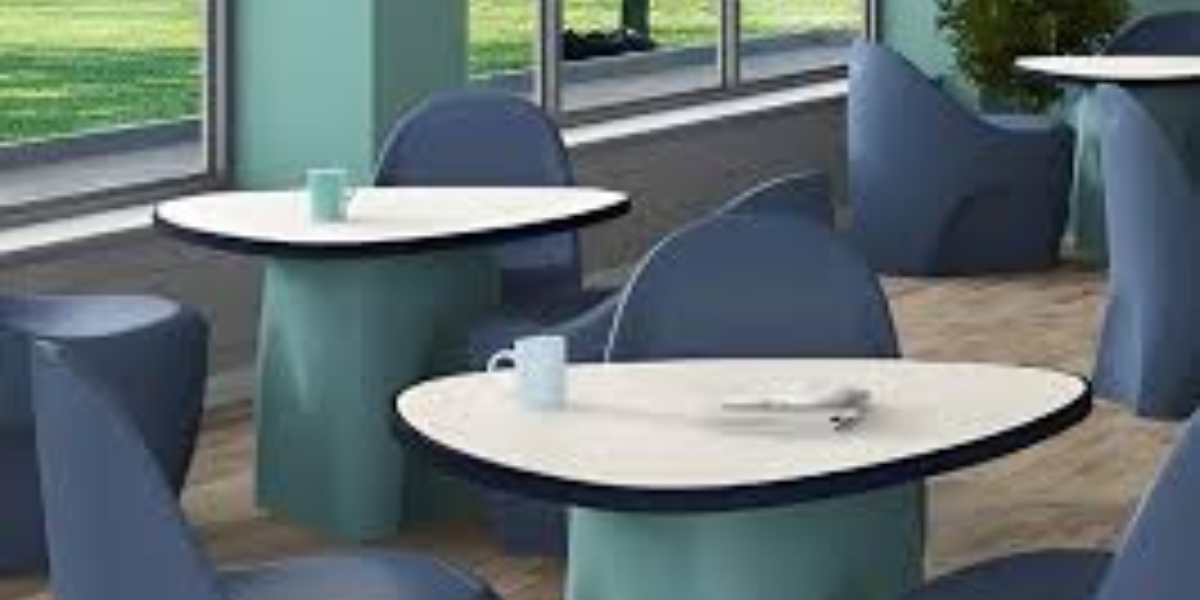
Selecting seating requires evaluating the environment as a whole. Rather than focusing solely on frame materials or upholstery, facilities should evaluate several key operational factors:
- Supervision Level: Will patients have continuous staff supervision, intermittent visual checks, or extended unsupervised time?
- Patient Acuity & Behavior: What are the anticipated behavioral profiles, traffic levels, length of stay, & mobility needs?
- Furniture Mobility: Should the chair remain movable for flexible room use, rely on concealed ballast for stability, or be permanently anchored to the floor?
- Sightlines & Inspection: Can staff quickly inspect beneath, behind, & around the chair during routine room checks? Does the placement obstruct emergency egress or clear visual monitoring?
Fixed or anchored furniture reduces movement-related risks, but it can complicate room reconfigurations, deep cleaning, & emergency access. On the other hand, lighter movable furniture offers flexibility but may require continuous supervision.
Regulatory agencies emphasize tailored risk evaluations. The Joint Commission requires setting-specific environmental risk assessments, while the Veterans Health Administration uses its Mental Health Environment of Care Checklist to identify hazards. The safest-looking chair isn’t always the best operational choice if staff can’t clean it thoroughly, inspect beneath it easily, or maneuver around it during an emergency.
Safety-Focused Chairs for Patient Rooms
Patient rooms present unique safety challenges because individuals may spend extended periods in these spaces without direct, continuous supervision. Patient room chairs must prioritize simple, tamper-resistant designs with minimal removable components & clear inspectability.
Molded Platform Chairs and Armchairs
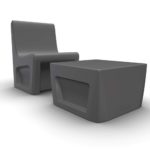
One-piece, rotationally molded polyethylene chairs are commonly used in patient rooms. These molded plastic chairs have enclosed forms with fewer joints and exposed fasteners. Smooth outer surfaces & rounded transitions simplify daily visual checks.
Armchairs offer upright support and help patients stand, but armless profiles eliminate potential leverage points in higher-acuity rooms. Facilities often choose molded plastic healthcare facilities furniture for patient rooms because it resists fluid penetration & withstands heavy daily use.
Weighted Seating and Concealed Ballast
Weighted safety chairs are a dependable option when floor mounting is not requested or not practicable. The addition of factory-installed or field-added ballast inside the chamber adds to the total weight of the chair, making it much tougher to throw, stack, or use to block entrances.
Ballast access panels shall be properly enclosed & protected with tamper-resistant hardware. Weight alone does not equal safety, but controlled weight helps keep the room stable while maintaining future plan flexibility.
Ligature-Resistant Profiles and Closed Bases
Patient room seating designed to be ligature-resistant often incorporates slanted or solid-front arms, fully enclosed plinth bases, and recessed fasteners. These design features decrease the amount of free space, looping points, and areas where things can be trapped or tied.
Behavioral Health Common Area Seating for Dayrooms and Group Spaces
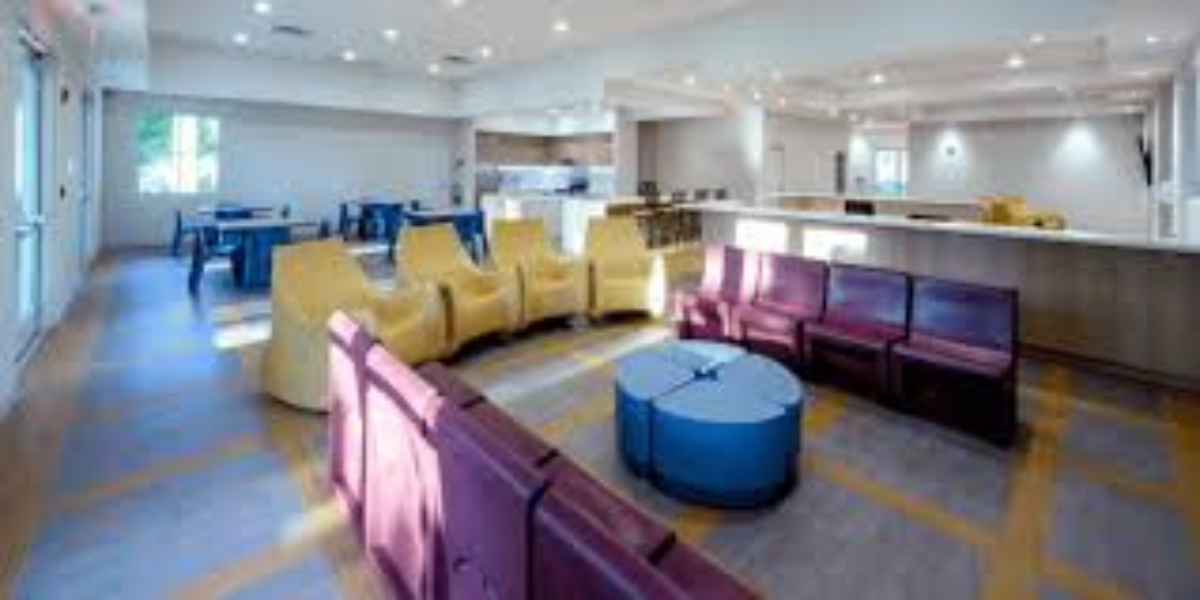
Dayrooms, group therapy spaces, & common lounges serve as central hubs for social interaction & daily programming. Seating in these areas must handle high traffic, constant repositioning, & frequent cleaning, all while remaining comfortable & safe.
Calming Rockers and Gliders
Controlled movement is a way to help with sensory modulation and to reduce anxiety in heavy-duty healthcare furniture settings. Heavy, durable rotationally molded rockers provide a soothing release in monitored dayrooms or sensory settings.
When examining motion while sitting, check the rock range, tip resistance, total weight, and potential pinch points. A heavy, tip-resistant rocker is a good choice for a supervised common area but may not be suitable for an unattended patient bedroom where motion components are more difficult to continuously monitor. Many facilities specify healthcare rocking chairs that offer a blend of comfort & durability for intensive use.
Modular Lounge Chairs and Sofas
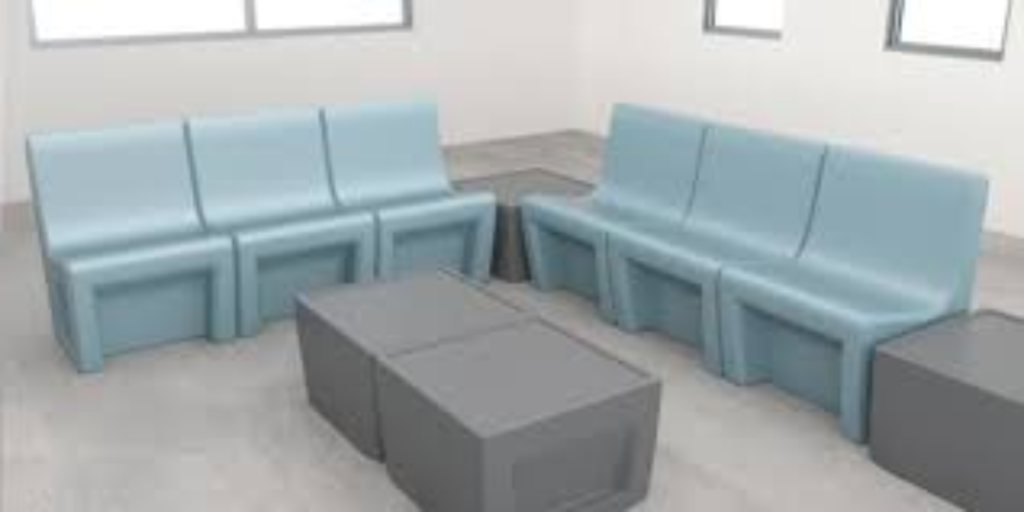
Group therapy & lounge spaces often require flexible seating layouts. Solid molded lounge modules or heavy-duty upholstered units with plinth bases allow facilities to configure seating arrangements that encourage positive social interaction while maintaining clear staff sightlines.
Individual chairs are often preferable to long, multi-seat sofas because they maintain clear personal boundaries & reduce visual blind spots. When using connected modular seating, inspect all connections & gaps between modules to ensure they don’t create hidden areas or attachment risks. Facilities frequently utilize modular upholstered seating to adapt spaces for varying group sizes.
Nonporous and Cleanable Finishes
Common-area furniture faces continuous wear & exposure to spills & cleaning chemicals. Nonporous molded surfaces and commercial healthcare-grade vinyl or polyurethane upholstery with sealed seams prevent liquids from soaking into internal foam cores.
Always check that the upholstery material is compliant with your facility’s unique disinfection regimen. Fabrics that are compatible with regular surface cleansers may crack or delaminate when subjected to harsher bleach-based solutions or short contact-time disinfectants.
Safety-Focused Chairs for Intake and Assessment Spaces
High turnover, unpredictable patient behaviors & short stays in intake, triage & crisis assessment areas. Seating in these places must allow for immediate visual inspections, quick cleaning methods, & clear physical circulation.
Secure Guest and Visitor Seating
We need durable, impact-resistant seats for patients, family members, and guests in intake areas. Seats with tough polymer or reinforced frames give the needed stability without being too sterile.
Armchairs allow anyone with decreased mobility to sit & stand with ease. Seamlessly combine bariatric-rated alternatives with conventional seating to provide safe, inclusive assistance throughout the waiting area.
Recliners With Concealed Mechanisms
Clinical recliners are often used in medical units, crisis observation areas, & prolonged assessment spaces where patients require medical monitoring or positioning support.
Recliners should have hidden mechanisms, protected controls & smooth, cleanable surfaces because moving parts, fold-out footrests, and mechanical levers can create pinch spots and hidden cavities. Recliners are best kept to regions where the clinical requirement warrants the additional mechanical complexity and where there is ongoing supervision by staff.
Armless Chairs, Sloped-Arm Chairs, and Stools
In high acuity holding or short-term evaluation rooms, simple armless chairs, sloped-arm seats, or fixed floor-mounted stools permit workers to have unimpeded sightlines. Armless designs remove lateral leverage points, & visual sweeps are quick & easy.
However, armless seating provides less physical support for patients needing assistance. Selecting between a stable armchair in a general intake room and a fixed stool in an acute assessment room depends entirely on the clinical goals & protocols of the space.
Patient Room vs. Common Area vs. Intake Seating
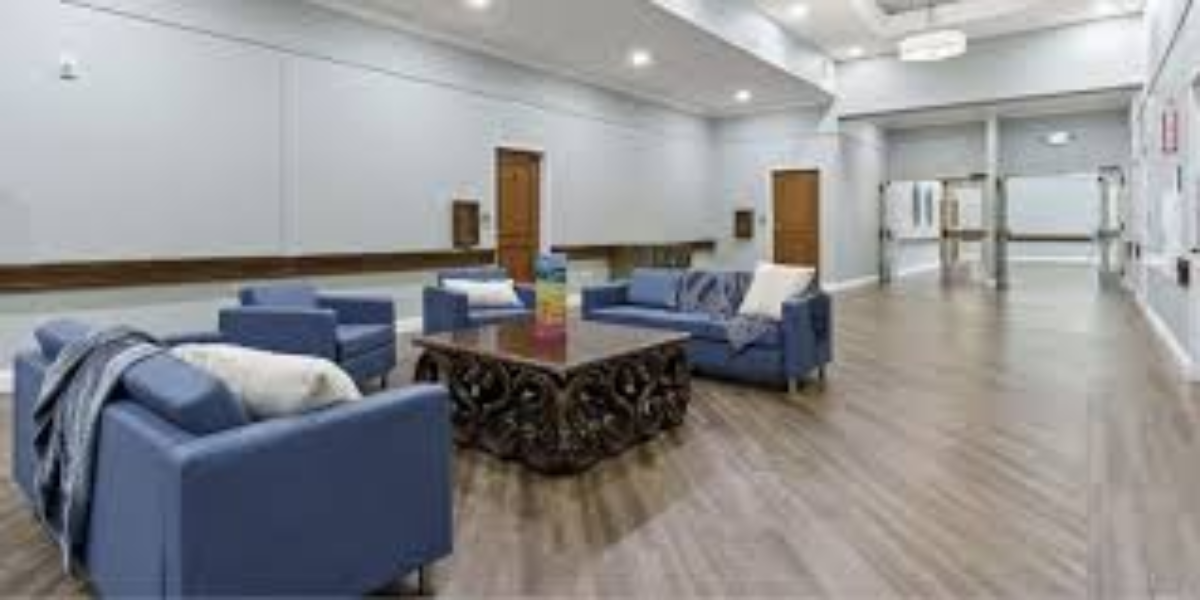
Comparing room requirements helps streamline product selection across different areas of a healthcare facility.
| Space | Typical Use | Priority Risks | Suitable Chair Categories | Features to Evaluate |
|---|---|---|---|---|
| Patient Room | Extended or unsupervised access | Tampering, ligature points, concealment, throwing | Molded platform chairs, armchairs, weighted chairs | Enclosed profile, tamper-resistant access, stability, easy inspection |
| Common Area / Dayroom | High traffic, group activities | Throwing, tipping, fabric picking, fluid exposure | Weighted chairs, rockers, modular lounge seating | Intensive-use durability, cleanability, comfort, controlled motion |
| Group Therapy Space | Supervised sessions, flexible layouts | Movement, crowding, blocked circulation | Individual armchairs, connected modular seating | Proper spacing, clear sightlines, controlled mobility |
| Intake / Waiting | Short stays, unpredictable acuity | Rapid escalation, high turnover, obstructed exits | Secure guest chairs, armchairs, heavy molded seating | Stable base, quick disinfection, mobility support, visibility |
| Assessment / Observation | Clinical evaluation, medical support | Accessible mechanisms, leverage points, restricted access | Fixed stools, specialized recliners (when clinically required) | Concealed mechanisms, protected controls, clear staff access |
Room function and supervision levels should determine chair features before style, upholstery options, or price are considered. Explore our full range of heavy duty healthcare furniture solutions to find options tailored to your facility’s needs.
Why Choose Furniture Concepts for Safety-Focused Chairs?
Behavioral healthcare furniture does not all require the same type of seating. We help facilities compare safety-focused chairs for patient rooms, dayrooms, group spaces, intake areas, and assessment rooms based on supervision, patient acuity, furniture mobility, cleanability, inspectability, and room function.
Available categories can include moulded seats, weighted chairs, modular lounge furniture, rockers, fixed stools and specialty recliners. “This room-specific approach enables the alignment of chair features with the documented risk assessment and operational needs of the facility.”
Conclusion
Choosing chairs for a behavioral healthcare involves more than just comparing durability, look, or pricing. Choosing the proper seating option relies on how each space is utilized, the level of patient supervision, expected behaviors, cleaning requirements, accessibility considerations, & if furniture needs to be mobile, weighted, or permanently attached.
Patient bedrooms tend to do well with simple, tamper-resistant chairs with enclosed bases and few parts. Common areas need durable, comfortable seating with a focus on intensive use. Intake & assessment spaces need secure & easy-to-check chairs that are easy to clean & provide clear sightlines for workers.
No chair can eliminate every safety risk. Behavioral healthcare seating should therefore be selected through a documented, multidisciplinary risk assessment involving clinical, facilities, infection-control, and safety teams. By matching chair features to the specific risks and operational needs of each space, facilities can create environments that better support patient dignity, staff effectiveness, and overall safety.
We offer behavioral healthcare furniture solutions for patient rooms, common areas, and intake and assessment spaces. When comparing safety-focused chairs, consider supervision, patient acuity, furniture mobility, sightlines, tamper and ligature risks, and cleaning requirements. Contact us today to discuss seating options suited to the risk profile and daily use of each space.
Frequently Asked Questions
What are Safety-Focused chairs?
Safety-Focused chairs are custom, institutional-grade seating solutions developed for behavioral healthcare facilities, psychiatric hospitals & crisis centers. They are engineered to meet safety problems, offer great durability, withstand heavy use, & ease cleaning methods.
Are all Safety-Focused chairs ligature-resistant?
No. Ligature resistance varies by design, & no chair is completely ligature-proof. Ligature-resistant chairs feature sloped arms, rounded edges, closed bases, & flush hardware to reduce attachment points, but safety depends on matching the chair to the room’s supervision level.
What is the difference between weighted and floor-mounted Safety-Focused chairs?
Weighted chairs contain internal ballast, such as sand or metal weights, to make them heavy & difficult to lift or throw while preserving layout flexibility. Floor-mounted chairs are permanently bolted to the floor, eliminating movement entirely.
What chairs are suitable for Behavioral Healthcare patient rooms?
Patient rooms typically require rotationally molded plastic chairs, weighted armchairs, or platform seating with enclosed bases, concealed hardware, & smooth surfaces that make visual checks fast and easy.
Can rocking chairs be used in behavioral health common areas?
Yes, heavy-duty rotationally molded rockers are often used in supervised common areas to promote relaxation. They should feature tip-resistant designs, enclosed sides to prevent pinch points, & smooth surfaces for easy cleaning.
Are recliners appropriate for intake or observation areas?
Recliners with concealed mechanisms & protected controls are appropriate for crisis observation or spaces when clinical care requires patient recline or positioning. They should be used in areas with active staff oversight.
How should behavioral health chairs be cleaned?
Chairs should be cleaned using hospital-grade disinfectants approved by the facility’s infection prevention team. Always verify that nonporous molded surfaces or upholstery fabrics are compatible with your facility’s specific cleaners & required contact times.
Do all behavioral health rooms require the same type of seating?
No. Seating should be selected based on the specific room, patient acuity, supervision level, & clinical goals. A chair suitable for a supervised dayroom may introduce unnecessary risks in an unsupervised patient bedroom.